

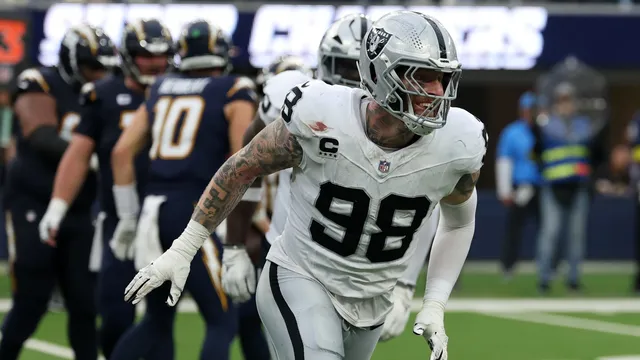
Ravens cancel trade for Maxx Crosby over health concerns
Ravens cancel trade for Maxx Crosby over health concerns
- The Ravens canceled the trade for Maxx Crosby after concerns arose from his physical examination regarding his knee health.
- John Spytek expressed satisfaction with keeping Crosby on the Raiders, highlighting their strong relationship.
- Crosby is determined to prove the Ravens wrong regarding their concerns about his abilities.
Story
In a significant development for the NFL, the Baltimore Ravens decided against finalizing a trade for defensive end Maxx Crosby from the Las Vegas Raiders after the completion of his physical examination. The trade was initially agreed upon and would have involved the Ravens giving up two first-round picks for the standout player. However, the Ravens expressed concerns about a degenerative issue in Crosby's knee, which raised doubts over his long-term durability and prompted the team to reconsider their decision. Crosby had recently undergone surgery for a torn meniscus, contributing to the Ravens' reservations about acquiring him. This situation unfolded just prior to the 2026 NFL season when teams traditionally assess their rosters and make strategic moves for improvement. The trade's collapse came amidst an active offseason, where the Ravens were looking to enhance their defensive lineup. General Manager Eric DeCosta emphasized the intention to improve the team’s composition and still considered adding to their defensive line, eventually signing Trey Hendrickson shortly after the Ravens pulled out of the Crosby trade. Hendrickson stated he was excited about potentially teaming up with Crosby had the trade proceeded, citing the potential of forming a formidable pass-rushing duo. Despite the disappointment of the trade's failure, both John Spytek, the Raiders' GM, and Maxx Crosby expressed optimism about his future with the Raiders. Spytek later commented on their strong relationship and the importance of competing within the team. Looking forward, Crosby's determination to prove the Ravens wrong about his capabilities could fuel his performance as he returns to the field in the NFL. The Raiders had made prior arrangements and were keen on maintaining their roster's strength, especially with Crosby recognized as one of the league's premier pass-rushers. As the NFL landscape continued to evolve, the dynamics of player trades and physical health evaluations gained heightened importance. In summary, this incident highlights the intricate balance between player health and team strategy in professional football, as well as the pressure on management to make impactful decisions amidst uncertainties regarding player conditions. With the NFL’s competitive nature, the focus now shifts to how the Ravens and Crosby will adapt to the evolving situation, while Crosby looks to re-establish his status as one of the top players in the league.
Context
Knee injuries represent a significant health concern for National Football League (NFL) players, impacting their performance, career longevity, and post-career quality of life. The high-contact nature of football, combined with the rigorous demands of the sport, predisposes players to various knee injuries, including anterior cruciate ligament (ACL) tears, meniscus tears, and collateral ligament injuries. These injuries not only impair a player's physical abilities but also require extensive rehabilitation, often leading to lengthy periods of inactivity. Research indicates that players suffering from severe knee injuries frequently experience not just physical challenges but also psychological ramifications, including anxiety and depression related to their ability to return to the field and regain prior performance levels. Statistical data highlights the prevalence of knee injuries among NFL players, with ACL injuries alone accounting for approximately 40% of all knee injuries within the league. These injuries often occur during critical game situations or in practice when players encounter unexpected contact or awkward falls. The recovery process can span several months, and there are significant variations in recovery outcomes among players, influenced by factors such as the type of injury, surgical interventions, and individual healing responses. Moreover, players who return from knee injuries may face heightened risks of re-injury, which affects their decision-making on the field and potentially decreases their overall performance during subsequent seasons. The financial implications of knee injuries for NFL players are substantial. Players suffering from chronic knee issues may face difficulties in securing contracts, which can affect their earning potential. In a league where contracts can be highly lucrative, prolonged recovery times due to knee injuries can translate to significant financial losses over a player's career. Furthermore, team dynamics are impacted by injuries, as franchises often have to navigate salary cap situations and player roster decisions influenced by a player's ability to contribute post-recovery. The economic burden of knee injuries extends beyond the players themselves, affecting teams and the league's overall health and competitive balance. To address these challenges, the NFL has implemented various strategies aimed at injury prevention and rehabilitation. Enhanced training protocols, player education, and advancements in medical technology are prioritized to mitigate the incidence and severity of knee injuries. The league also invests in research to better understand injury mechanisms and develop preventative measures. While considerable progress has been made, the risk of knee injuries in the NFL remains a critical concern, necessitating ongoing attention from medical professionals, team management, and player advocacy groups. The continued examination of knee injuries' impacts on players is essential for advancing player safety and promoting health within the sport.


