
sport
informative
update

Ireland claims fourth Triple Crown despite missing Six Nations title

Mar 13, 2026, 1:06 PM60
(Update: Mar 16, 2026, 11:12 AM)
country in Northwestern Europe
country in north-west Europe, part of the United Kingdom
English rugby league footballer

Ireland claims fourth Triple Crown despite missing Six Nations title

  • Ireland secured a 43-21 victory over Scotland, achieving their fourth Triple Crown in five years.
  • Despite the victory, Ireland's title hopes were critically dependent on England unexpectedly defeating France.
  • Ultimately, France triumphed over England, denying Ireland the opportunity to reclaim the Six Nations championship.
Share your opinion
6

Story

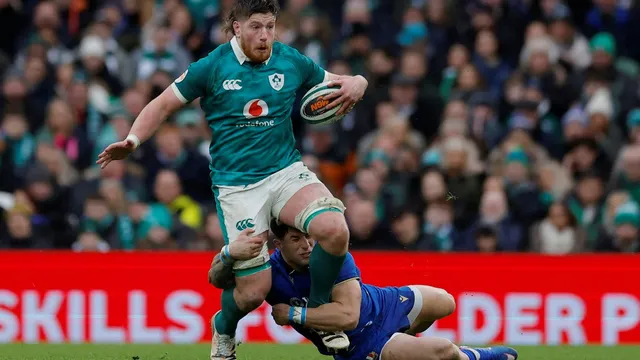
Ireland achieved a significant victory over Scotland in Dublin with a score of 43-21, allowing them to secure their fourth Triple Crown in five years. This match took place during the final round of the Guinness Six Nations on Super Saturday, amidst a three-way title chase involving Ireland, France, and Scotland. The match displayed Ireland's dominance and marked their 12th consecutive victory against Scotland. Despite this impressive win, Ireland's hopes for the overall Six Nations title were dashed when France defeated England 48-46, clinching the championship title at the last moment. Head coach Andy Farrell expressed immense pride in his team's accomplishments during the tournament, highlighting the team’s growth, resilience, and the depth of talent displayed throughout the course. Farrell’s post-match comments reflected the emotional highs and lows experienced by the team, especially considering the dramatic nature of the final rounds. The overall performance of Ireland in the Six Nations highlighted both the team's competitive spirit and the ever-changing dynamics of international rugby, culminating in a bittersweet outcome where they excelled yet fell short of the ultimate prize.

Context

The Ireland rugby team, also known as the Irish national rugby union team, represents the island of Ireland in international rugby union. The team's history is both rich and varied, reflecting the changing political and social landscape of Ireland. The Ireland rugby team was formed in 1874, with its first international match being played against England. Since then, the team has participated in numerous international competitions and has experienced varying degrees of success, building a passionate following among fans. Over the years, the team has evolved, blending traditional strengths with modern approaches to the game, which has allowed it to compete effectively on the world stage. One of the most notable aspects of the Ireland rugby team is its participation in the annual Six Nations Championship, which includes teams from England, France, Italy, Scotland, and Wales. Ireland has had significant success in the tournament, winning multiple championships and titles. The team's first Grand Slam victory in the tournament came in 1948, and this achievement was followed by others, including a memorable Grand Slam in 2009, led by legendary players like Brian O'Driscoll. Such victories have solidified the team's reputation as one of the top rugby nations and have contributed to its legacy in the sport. On the global stage, the Ireland rugby team has been a consistent competitor in the Rugby World Cup since its inception in 1987. Although the team has yet to secure a World Cup victory, it has advanced to the knockout stages several times and reached the quarter-finals multiple times, demonstrating its competitiveness and ability to challenge the best teams in the world. The team's performances in recent years have been particularly strong, with a number of players achieving personal accolades and leading the team to historic victories, further enhancing its standing in international rugby. In addition to on-field accomplishments, the Ireland rugby team's history is also marked by its deep-rooted sense of national pride and cultural identity. Rugby has long been a sport that brings together people from diverse backgrounds across the island, transcending political and social divisions. The team's success has been a source of unity and inspiration, and its players have often been seen as ambassadors of Ireland, promoting the values of sportsmanship, camaraderie, and resilience. As the team continues to evolve and grow, its storied history and contributions to the sport are likely to remain a defining aspect of Ireland's cultural landscape for many years to come.

2026 All rights reserved
