
Netanyahu exploits Iran war to distract from Palestinian issues
- The war with Iran initiated by US-Israeli strikes has highlighted ongoing inequalities faced by Palestinians in Jerusalem.
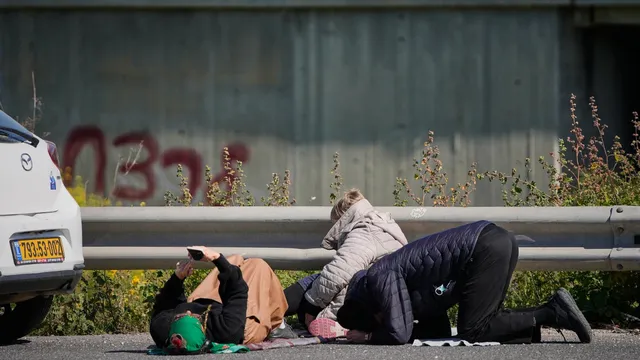
- Residents express concern over insufficient shelter access during attacks and a lack of attention to their daily struggles.
- Many believe that Netanyahu's military actions serve to distract from significant internal issues, including the Israel-Palestinian conflict.
Story
Amid the conflict with Iran, which escalated with US-Israeli bombardments on February 28, 2026, Palestinians in East Jerusalem express that their struggles continue largely unchanged. This war, often highlighted in Israeli media, has intensified their feelings of inequality and neglect, particularly highlighting their lack of access to bomb shelters compared to Jewish neighborhoods. Many residents, including Adele Younan, perceive Netanyahu's military actions as a tactic to retain power and divert attention from pressing internal issues, such as the ongoing Israeli occupation and settlement expansion in Palestinian territories. Reports indicate that there are alarming levels of violence against Palestinians by settlers, often aided by Israeli Army reservists, which points to a deeper, systemic conflict that persists despite external hostilities. Political perspectives in Palestinian communities emphasize that resolution of their grievances is crucial for enduring regional peace. They argue that attempts by various regimes in the Middle East to manipulate the Palestinian situation for their agendas are intrinsically linked to the unresolved state of the Palestinian issue. However, they worry that Netanyahu’s administration is unlikely to pursue substantive dialogue or resolutions with Palestinians, regardless of the outcomes of the ongoing war with Iran.
Context
The impact of the Iran war on the Palestinian-Israeli conflict has been multifaceted, influencing the dynamics of regional politics as well as the direct interactions between Palestinian factions and Israeli authorities. As Iran has historically supported various Palestinian groups, this support has intensified as a consequence of the ongoing conflict. Iran’s military, financial, and ideological backing of organizations such as Hamas and Islamic Jihad has not only provided these groups with the means to further their agendas but has also complicated the Israeli response to militant actions. With its influence extending over the Gaza Strip and in parts of the West Bank, Iran's role has been pivotal, shaping strategies and retaliatory measures that consequently escalated tensions between Israel and Palestinian groups, often leading to broader military confrontations that have severely impacted civilian populations on both sides. Moreover, the Iran war has generated regional ramifications that have altered the geopolitical landscape. Countries in the Middle East have recalibrated their alliances and enmities in response to the conflict. Some Arab nations have begun to confront Iran's expanding influence, leading to a reconsideration of their relationships with Israel. This realignment has resulted in new forms of cooperation aimed at countering Iranian aggression, yet it has also led to heightened insecurities within the Palestinian territories. Palestinians find themselves navigating a political maze, where their struggle for autonomy and statehood is increasingly overshadowed by broader regional confrontations—forcing factions to seek new alliances and strategies amid fluctuating regional loyalties. The behavior of both Palestinian and Israeli actors has been notably influenced by the developments surrounding the Iran war. For instance, Israel has ramped up its military operations in areas perceived as controlled or influenced by Iranian-supported groups, asserting that such actions are necessary for national security. This has led to retaliatory assaults by Palestinian factions, further fueling the cycle of violence that has historically characterized the conflict. Meanwhile, within Palestinian political discourse, there has been a tendency to leverage anti-Israel sentiment in the face of Iranian support, leading to a temporary consolidation among divergent political factions, which can either strengthen resistance against Israeli policies or create internal rivalries—depending on the prevailing conditions. In conclusion, the war in Iran and its consequent effects on geopolitical dynamics have redefined the Palestinian-Israeli conflict in several ways, impacting alliances, military strategies, and internal political landscapes. As these tensions evolve, the humanitarian consequences for civilians caught in the crossfire remain dire, necessitating a concerted effort from local and international actors to seek resolutions that address both the immediate security concerns and the long-term aspirations for peace in the region. The interplay between the Iranian conflict and the Palestinian struggle thus remains crucial for understanding the future trajectory of this deeply rooted conflict.
