

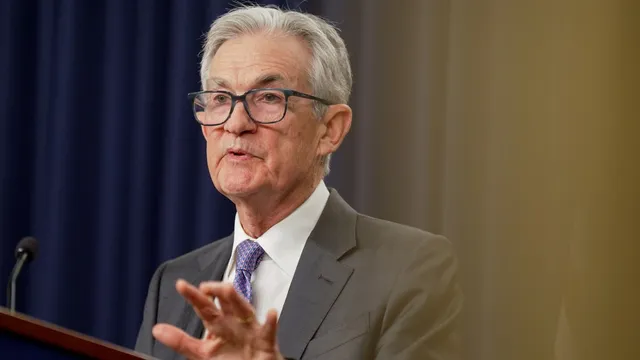
Federal Reserve prepares to cut interest rates for the third time this year
Federal Reserve prepares to cut interest rates for the third time this year
- The Federal Reserve is expected to lower interest rates for the third time in 2025.
- Inflation remains above target while hiring slows down, causing a split in Fed officials' opinions.
- Market responses indicate a significant concern over economic conditions, with expectations of future rate cuts.
Story
In the United States, anxiety looms over the upcoming Federal Reserve meeting, where officials are expected to announce a third interest rate cut this year. Recent mixed signals in the labor market alongside stubborn inflation have compelled the Fed to consider lowering rates to boost hiring. Reports indicate that the probability of a quarter-point rate reduction now stands at 87%, reflecting a significant increase in market sentiment from previous weeks. Heightened concerns regarding the economy's performance, coupled with delayed jobs and inflation data due to the prolonged government shutdown, have added complexity to the Fed's decision-making process. The debate within the Fed regarding the dual mandate of controlling inflation while maximizing employment presents a tricky conundrum. While inflation rates have hovered above the Fed's targeted 2%, job growth has been sluggish. The current economic landscape is further complicated by uncertainties such as President Donald Trump's tariffs, which have impacted businesses and hiring strategies. Furthermore, the Fed remains divided among officials about the best approach to tackle current economic challenges, making the forthcoming decision increasingly critical. On Wall Street, reactions to the Fed's anticipated decisions have already been observed, including slight declines in Asian market shares, hinting at the ripple effects of expected changes in U.S. monetary policy. Analysts and financial experts are closely monitoring Fed Chair Jerome Powell's remarks, as they could provide insight into future rate adjustments and overall economic strategy. Meanwhile, the implications of interest rate cuts hold significance for both borrowers and savers, as cut rates can ease debt burdens but also decrease returns on savings. As the financial community awaits the official announcement, future developments in inflation and labor market trends will likely shape the Fed's trajectory and influence its subsequent meetings. Analysts predict that only one more rate reduction could occur in the coming year, but this assessment may change depending on incoming economic data. With upcoming reports poised to reveal more about the labor market and inflation, the Fed's decisions could take on even greater weight regarding the trajectory of the U.S. economy as it moves into 2026.
Context
The Federal Reserve's decision to adjust interest rates is a pivotal factor that influences economic conditions in the United States and beyond. An interest rate cut is often employed as a monetary policy tool to stimulate economic activity, particularly during times of slow growth or recession. Lowering interest rates helps to reduce borrowing costs for consumers and businesses, which can lead to increased spending and investment. This spending can, in turn, boost demand, create jobs, and stabilize or grow the economy. However, the implications of such a decision go far beyond immediate economic stimulation and can have long-term impacts that warrant careful consideration by policymakers, investors, and the public. One significant implication of a Federal Reserve interest rate cut is its effect on inflation. Typically, lower interest rates lead to increased consumer spending and investment, which can push up prices if the economy is operating near its capacity. A controlled rise in inflation can be beneficial, as it encourages spending over saving, but if inflation rises too swiftly or exceeds targeted levels, it could lead to unforeseen economic volatility. The Federal Reserve must therefore carefully balance rate cuts with the potential risks associated with inflationary pressures. Additionally, interest rate cuts can impact financial markets profoundly. With lower rates, returns on savings accounts and fixed-income investments, such as bonds, typically decrease. This scenario drives investors to seek higher yields in riskier assets, such as stocks or real estate, which can inflate asset prices and potentially create bubbles. A prolonged low-interest-rate environment can also lead to mispricing of risk in financial markets, encouraging excessive borrowing and speculative investments that could pose threats to economic stability if left unchecked. Finally, the global implications of U.S. interest rate cuts cannot be overlooked. Lower rates in the U.S. may lead to capital outflows to other countries offering higher yields, thereby exerting pressure on the U.S. dollar. Currency fluctuations can have notable impacts on international trade and investment. Countries that rely heavily on U.S. investment may feel the effects of the rate cuts, while emerging markets could see both opportunities and challenges as their currencies adjust to changes in the U.S. monetary policy. Overall, while rate cuts by the Federal Reserve are intended to support economic growth, the multifaceted consequences highlight the importance of thorough analysis and monitoring of emerging economic conditions.


