

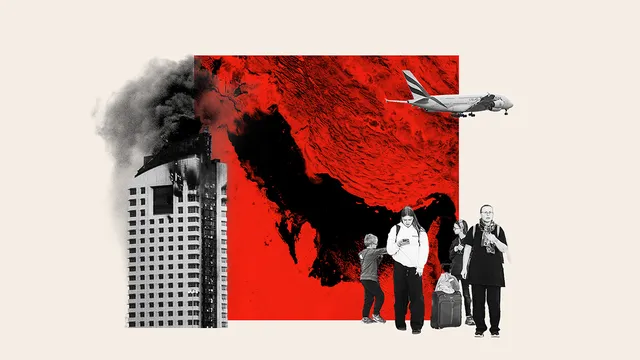
Qatar's PM condemns Iran's strikes as betrayal of Gulf countries
Qatar's PM condemns Iran's strikes as betrayal of Gulf countries
- Sheikh Mohammed bin Abdulrahman al Thani criticized Iran's attacks as a dangerous miscalculation that threatens regional stability.
- Qatar emphasizes that 25% of attacks are targeting civilian facilities, highlighting the unjust impact on the local population.
- The situation escalates as Qatar's role in global gas supply could have far-reaching consequences on the economy if the attacks continue.
Story
In a recent interview, Sheikh Mohammed bin Abdulrahman al Thani, the Prime Minister of Qatar, expressed his country's strong condemnation of Iran's missile and drone attacks on Gulf nations. These aggressions, described as a 'dangerous miscalculation,' were launched just an hour after the commencement of the war and have led to significant instability in the region. Qatar, which has historically maintained diplomatic relations with Iran, now faces a strained relationship marked by feelings of betrayal and anger. Al Thani emphasized that, amidst this crisis, military escalation would only deepen tensions and that responsibility lies with all parties involved. The implications of these strikes extend beyond regional borders, as Qatar plays a critical role in global energy supplies, providing approximately 20% of the world's gas. Attacks on civilian targets, including airports, water utilities, and gas infrastructure, threaten to disrupt markets and food supplies worldwide. Al Thani warned that if these strikes continue, they could lead to dire consequences affecting the global economy and food distribution, reminding observers that the effects of a conflict in the Gulf will be felt globally. The Prime Minister's statements came at a time when tensions in the region were escalating due to ongoing conflicts involving Iran, Israel, and the U.S. As coalition forces prepare for what military leaders suggest may be a prolonged engagement, Saudi Arabia has also reported casualties from Iranian attacks, indicating that the conflict has begun to draw more nations into its folds. Al Thani reiterated Qatar's stance of non-involvement in wars with neighbors, underlining their desire for peace and stability in the region, and urged for diplomatic solutions. In response to the escalating situation, global leaders, including the French President Emmanuel Macron, have urged Iran to halt its aggressive actions. Despite these calls for peace, military actions persist on both sides, leading to rising fears of a larger regional conflict with broader implications. The plight of displaced civilians and casualties in Lebanon and Israel exemplifies the immediate humanitarian impact of the ongoing war, highlighting the urgent need for dialogue and a comprehensive resolution.


