

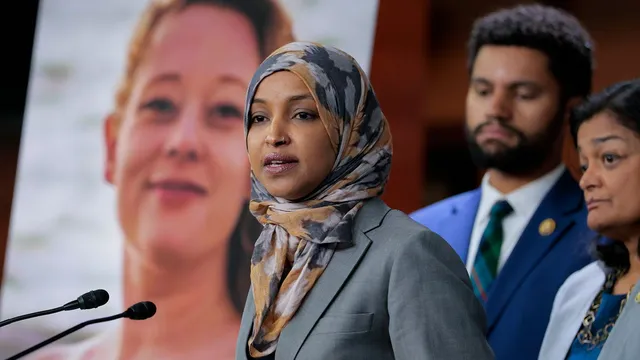
Ilhan Omar blasts Trump for wasting taxpayer dollars on fraud prosecution
Ilhan Omar blasts Trump for wasting taxpayer dollars on fraud prosecution
- Ilhan Omar made accusations against the Trump administration regarding the misuse of taxpayer resources.
- She claimed that fraud prosecutions primarily affected the Somali community and questioned their validity.
- Omar's claims sparked discussions about accountability and how minority groups are impacted by political narratives.
Story
In the context of public statements given during an interview, Representative Ilhan Omar, a Democratic congresswoman from Minnesota, has made strong accusations against former President Donald Trump’s administration for misusing taxpayer funds. Omar pointed to a series of fraud prosecutions that supposedly targeted members of the Somali community, suggesting that the administration's actions resulted in unnecessary financial expenditures. She framed her argument around the broader theme of resource allocation under the current political climate. Omar indicated her concerns during a segment on a liberal television network where such views tend to go unchallenged, allowing her to discuss potentially sensitive topics without substantial pushback. Omar's comments come amidst ongoing tensions around immigration policy and the actions of U.S. Immigration and Customs Enforcement (ICE). She expressed alarm that the administration appears eager to escalate encounters that could have violent implications, suggesting that this tactic could be part of a larger plan to invoke emergency powers. This conspiracy theory was critiqued by journalists and commentators who highlighted the potential ramifications of such allegations on public perception and policy. Her claims regarding the necessity of fraud prosecutions and the alleged targeting of individuals from her community have been met with skepticism, particularly as data show that convictions related to fraud have continued under different administrations, including during Trump’s presidency. Moreover, Omar's remarks about welfare fraud and resource usage came at a time when public scrutiny of governmental spending has increased, particularly in relation to high-profile cases that involve prominent political figures. The conversation around fraud has been polarizing as it often intersects with issues of race and immigrant status, further complicating Republican and Democratic narratives. While she sought to absolve her party of complicity in any fraudulent acts, critics argue that her statements reflect a pattern of political rhetoric aimed at deflecting accountability. Omar's assertions not only emphasize her challenges within the political game but also depict the broader struggle between different factions within American society concerning authenticity in leadership and the ethical implications of policy choices. The political landscape has made it clear that claims of impropriety in government spending and financial misconduct will remain pivotal topics of debate. Despite the existing friction between Omar's district which has faced scrutiny and the narrative being propagated by conservative factions, her firm stance on the validity of concerns surrounding misappropriation of public funds is likely to continue to resonate with her constituents and activists alike. The implications for how minority communities are portrayed and treated through policy ultimately extend beyond Omar's comments and impact larger societal frameworks related to equity and representation. With various upcoming elections, the dialogue surrounding these issues will undoubtedly intensify, firmly placing Omar at the center of a complex narrative that bridges ethnic, cultural, and political divides.


