

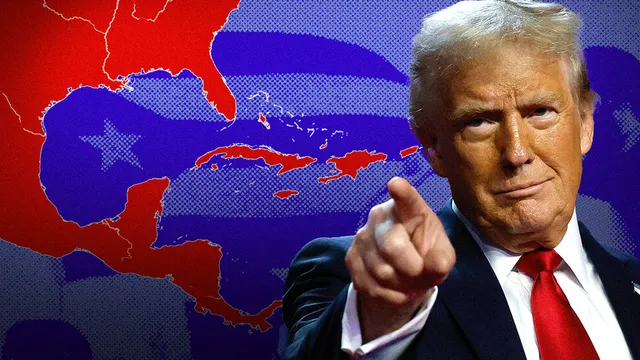
Trump intensifies economic pressure campaign on Cuba
Trump intensifies economic pressure campaign on Cuba
- The U.S. plans to escalate economic measures against Cuba to force regime change.
- Current conditions in Cuba include fuel shortages and frequent blackouts, leading to public discontent.
- The U.S. strategy aims to increase pressure while avoiding military intervention, potentially to incite uprisings.
Story
Cuba, a nation under a long-standing U.S. embargo, faces severe economic challenges as the U.S. government, led by President Donald Trump, seeks to increase its campaign aimed at regime change in the island nation. Recent reports indicate that the Cuban economy is suffering due to near-total fuel starvation and daily blackouts that can last up to 20 hours. The U.S. administration has employed a phased approach to its pressure campaign, strategically avoiding direct military intervention, as various sources revealed that worsening conditions may eventually lead to public protests against the government. Several officials from the Trump administration have outlined their strategy, emphasizing that while they aim to apply economic pressure, they are cautious not to eliminate the regime too swiftly. The intent is to provoke increasing civil unrest among Cubans who are experiencing deteriorating living conditions due to sanctions. In fact, some sources suggested that the sustained economic hardships could prompt riots that would challenge the government. Officials believe that hunger and lack of resources will incite Cubans to take to the streets in protest. In tandem with this campaign, the U.S. military is reportedly positioning its forces near Cuba, as indicated by reconnaissance activities aimed at being prepared for any potential military response if the situation escalates further. The presence of naval vessels, such as the USS Nimitz, suggests a readiness to act should the U.S. administration decide that intervention is necessary. In response to these developments, Cuban officials have warned against military action, stating that it would lead to significant loss of life and could destabilize the region. Criticism of the U.S. blockade has emerged from various quarters, with human rights advocates condemning the sanctions as a violation of international law and an act of collective punishment. U.N. human rights experts have also referred to the blockade as resulting in what they describe as “energy starvation” and a serious infringement on the rights of the Cuban people. As conditions continue to worsen, they argue that the situation requires urgent international attention to prevent greater human suffering. Amid these developments, the U.S. administration continues to evaluate its options, hoping to create a situation that leads to regime change without resorting to direct military confrontation, which it acknowledges could devolve into chaos.
Context
The economic sanctions imposed by the United States on Cuba represent a complex interplay of political, historical, and economic factors that have evolved over decades. The roots of these sanctions can be traced back to the 1959 Cuban Revolution led by Fidel Castro, which resulted in the nationalization of numerous American-owned businesses and properties without compensation. In response, the U.S. government implemented a series of economic restrictions aimed at isolating the Cuban regime and pressuring it to adopt democratic reforms and respect human rights. The most significant measure among these was the Cuban Trade Embargo, enacted in 1960, which banned all American exports to Cuba and later broadened to include imports as well, marking the beginning of a long-standing policy of economic isolation that would continue for decades. Throughout the 1960s and 1970s, the sanctions intensified as the U.S. sought to respond to Cuba's alignment with the Soviet Union during the Cold War. This geopolitical context not only influenced American policies towards Cuba but also incorporated broader Cold War dynamics, ultimately leading to the 1962 Cuban Missile Crisis. In the following years, U.S. sanctions were solidified with the passage of the Cuban Democracy Act in 1992 and the Helms-Burton Act in 1996, which further entrenched the embargo and aimed to promote a change in government through economic pressure. The Helms-Burton Act, in particular, codified the embargo into law, making it much more difficult for future administrations to lift the sanctions without congressional approval. The effects of these sanctions on Cuba have been profound, contributing to significant economic hardships and exacerbate the difficulties faced by the Cuban people. The embargo has restricted access to goods, including essential items such as food, medicine, and technology. As a result, Cuba has continually sought to circumvent the embargo through various means, including creating trade partnerships with other nations, particularly in Latin America and Europe. However, the sanctions have also had a significant political impact, consolidating the Cuban government's power by framing the U.S. as an external adversary. This narrative has allowed the regime to justify its authoritarian practices and limit political dissent by depicting critics as agents of foreign powers. In recent years, there have been attempts to reevaluate the sanctions policy. Initiatives during the Obama administration aimed at normalization of relations included easing some travel restrictions, allowing remittances, and promoting business exchanges. However, these efforts faced strong opposition and were rolled back under subsequent administrations, which reinstated stricter measures as part of a broader strategy to isolate the Cuban government once again. The debate over the effectiveness and morality of the sanctions continues, with arguments that they may ultimately hinder the very democratic changes they are intended to provoke. As the global context evolves, so too may the U.S. approach to economic sanctions on Cuba, reflecting the ongoing complexity of this longstanding conflict.


