

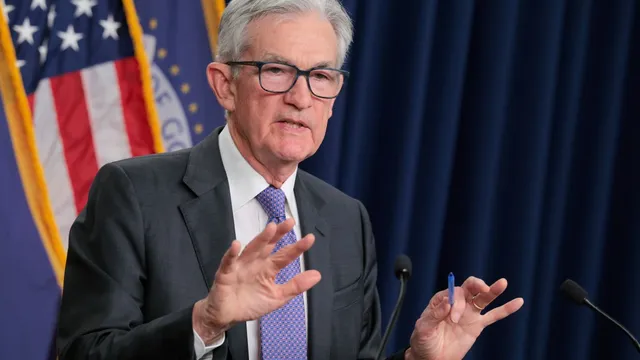
Jerome Powell warns about the reality of a K-shaped economy
Jerome Powell warns about the reality of a K-shaped economy
- The Federal Reserve acknowledges signs of a K-shaped economy affecting different income groups.
- Jerome Powell highlights data collection issues potentially overstating job creation.
- The central bank's current policies aim to stabilize the labor market amid a complex economic scenario.
Story
In the context of economic fluctuations, Jerome Powell, the Federal Reserve chair, has indicated significant concern regarding the emerging K-shaped economy in the United States. This concept suggests that while higher-income households continue to see gains from stock market performance and rising home values, lower-income individuals are experiencing a decline in purchasing power due to inflation and a tightening job market. At a recent press conference, Powell remarked that this phenomenon was reflected in the data collected by the Federal Reserve and constitutes a real challenge for future economic stability. During the Fed's latest rate-setting meeting, Powell discussed the implications of the current economic situation, focusing particularly on labor market trends. He noted that although recent job numbers suggest some positivity, there is a growing concern about the potential overstatement of job creation due to gaps in data collection stemming from the government shutdown and the pandemic's impact on measurement accuracy. Indications show a possible net loss of jobs rather than creation, which complicates the picture further. Powell conveyed skepticism about the sustainability of the K-shaped economic trend, questioning its durability and expressing doubt about its capacity to continue long-term without addressing underlying inequalities. The Federal Reserve recently lowered interest rates for the third time that year to aid the labor market while reinforcing a neutral approach to current economic conditions. Notably, Powell highlighted a moderate cooling in the labor market, although he does not foresee a severe downturn. He pointed out that any observed slowdown might be attributed to lowered immigration and labor force participation, among other factors. The upcoming release of the November jobs report and revisions to past employment figures further emphasize the complexity of the current economic landscape. Powell stated that despite his concerns, the Fed's current trajectory aims to maintain economic stability. However, this balancing act is underscored by conflicting data and external pressures, including criticism from political figures like President Donald Trump. Conversations surrounding the Fed's policies will likely remain contentious as the nation navigates these economic challenges in the months ahead.
Context
A K-shaped economy describes a situation in which different segments of the economy recover at different rates from a recession or economic downturn. The term "K" represents the divergent paths of growth: one upward path indicating sectors or groups that are thriving and experiencing growth, while the other downward path signifies those that are struggling or declining. This concept highlights the inequalities in economic recovery, where some sectors, businesses, or demographics rebound quickly, whereas others face prolonged difficulties. This phenomenon can be particularly visible in times of significant economic stress, such as during the COVID-19 pandemic, where certain industries, like technology and e-commerce, flourished, while sectors such as tourism and hospitality suffered disproportionately. The implications of a K-shaped recovery are profound, impacting socioeconomic structures and altering the landscape of opportunities available to various groups. In a K-shaped economy, the wealth gap often widens, as those at the top of the economic spectrum benefit from a recovery driven by technological advancement and changes in consumer behavior. Meanwhile, lower-income individuals and those employed in hard-hit industries may experience job losses, reduced wages, and decreased economic mobility. This growing divide can lead to social unrest and increased demand for policy interventions, such as aid programs or legislative measures aimed at supporting the struggling sectors. Addressing the challenges associated with a K-shaped economy requires targeted economic policies and strategic investments. Policymakers need to design initiatives that support the sectors that are lagging behind while continuing to bolster those that are thriving. Additionally, there is a need for workforce development and retraining programs that help individuals transition from declining industries to emerging sectors. This proactive approach is vital not only for stabilizing the economy but also for fostering a more equitable recovery that ensures all individuals benefit from economic progress. In conclusion, understanding the dynamics of a K-shaped economy is crucial for navigating future economic landscapes. As such, awareness of the disparities in recovery rates helps identify the key areas where intervention is needed for a balanced and inclusive growth model. Economists and researchers must continue to study these patterns to inform policy decisions that address the imbalances created by K-shaped recoveries, ultimately promoting a more resilient and equitable economy for the future.


