
Intelligence report warns lone wolf attackers threaten us homeland
- The U.S. intelligence community's 2026 Annual Threat Assessment emphasizes the rising danger of lone wolf attackers driven by extremist ideologies.
- Online radicalization has become a significant factor in facilitating these threats, with individuals often acting independently.
- There is a contentious political debate regarding the responsibility for terrorism threats, with House Democrats attributing blame to Donald Trump.
Story
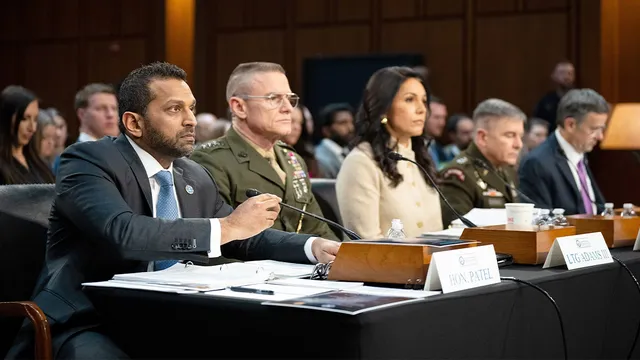
In recent assessments, the U.S. intelligence community has identified lone wolf attackers, driven by extremist ideologies, as the most probable terrorist threat facing the United States. This conclusion was presented in the 2026 Annual Threat Assessment, released by Director of National Intelligence Tulsi Gabbard during a Senate Intelligence Committee hearing. The assessment indicates a troubling trend: while groups like ISIS and al-Qaeda still aim to target the U.S., their operational capabilities have declined significantly over time, limiting their potential to execute complex attacks. Instead, individuals radicalized online have emerged as the primary concern, conducting attacks with minimal direction and often employing straightforward tactics. The 2025 threat report had similarly highlighted that terrorist threats are increasingly emanating from individuals acting alone or in small groups. The rise of online radicalization has played a crucial role in this paradigm shift, as individuals encountering extremist narratives find validation for violent desires. The assessment points out how jihadist narratives can exploit personal grievances, attracting followers who may not have prior connections to Islamic ideologies but feel disillusioned by their experiences. Concurrently, House Democrats have expressed blame towards former President Donald Trump for the elevated terrorism threat following attacks in the U.S. They argue that his policies have compromised national safety. Representative Maxwell Frost and Minority Leader Hakeem Jeffries emphasized this view, linking Trump’s actions to the perceived increase in terrorism. However, Democrats have faced criticism for not adequately funding the Department of Homeland Security (DHS), which experienced a shutdown due to funding lapses in February, raising concerns over potential vulnerabilities for terrorist attacks within the country. While congressional Republicans argue that Democratic reforms are unworkable and leave Americans at risk, Democrats continue to demand changes before reopening the DHS. The intelligence report reflects ongoing vigilance among U.S. officials in tracking terrorist activities, particularly in light of recent operations in the Middle East. Stricter border enforcement has reportedly succeeded in limiting access to potential terrorists attempting to enter the U.S. According to Gabbard, there have been very few encounters with individuals connected to terrorist groups at U.S. borders since January. Nonetheless, efforts to identify and remove suspected terrorists already within the country are ongoing, showcasing a two-fold strategy to combat domestic terrorism.
Context
Lone wolf attacks in the United States have become a significant concern in recent years due to their unpredictable nature and the growing frequency with which they occur. These attacks are typically executed by individuals acting independently of organized groups, carrying out their violent plans based on their ideologies or personal grievances. The motivations behind these lone actors can vary widely, ranging from political extremism, religious radicalization, to personal mental health issues. Throughout the history of the U.S., various incidences reflect the stark reality of such violence, raising alarms about public safety and the ability to preemptively identify potential threats. The increase in lone wolf incidents, particularly in the last two decades, can be attributed to several factors, including the rise of social media, which provides platforms for radical ideologies and helps individuals connect with like-minded entities. This helps foster an environment where isolation and resentment can grow, allowing alienated individuals to plan attacks without the necessity of formal group support. Noteworthy incidents, such as the 2016 Orlando nightclub shooting and the 2017 Las Vegas shooting, illustrate the devastating impact such attacks can have on communities and the lingering questions surrounding prevention and intervention strategies. Law enforcement agencies and researchers continually grapple with the challenge of monitoring vast online conversations without infringing on privacy rights or civil liberties. In response to the increase in these types of attacks, there has been a concerted effort by both federal and local authorities to enhance threat assessment protocols and encourage community vigilance. Programs aimed at educating the public on recognizing signs of radicalization or troubling behavior have also been developed. Collaborative measures among various law enforcement agencies, intelligence communities, and outreach programs are essential for increasing the chances of identifying potential lone wolves before they act. Nevertheless, the challenge remains—how to balance civic freedoms with effective monitoring in a free society is an ongoing debate. Despite the continued efforts to understand and address the root causes of lone wolf attacks, many unanswered questions persist. Researchers focus on uncovering psychological profiles and behavioral patterns of these individuals to develop predictive models that can help thwart future attacks. Comprehensive studies aim to track the evolution of such violence and highlight the influential role of societal and cultural factors in fueling individual grievances leading to violence. Although each incident is unique, patterns emerge that suggest commonalities in motivation and execution, suggesting that a multifaceted approach is necessary for prevention and response strategies in countering the threat of lone wolf attacks.
