

Philippines braces for more storms as La Nina looms
Philippines braces for more storms as La Nina looms
- More than one million people were displaced in the Philippines due to recent typhoons.
- Meteorologists warn of potential additional storms caused by the La Nina weather system.
- Authorities emphasize the need for disaster preparedness in light of upcoming climatic challenges.
Story
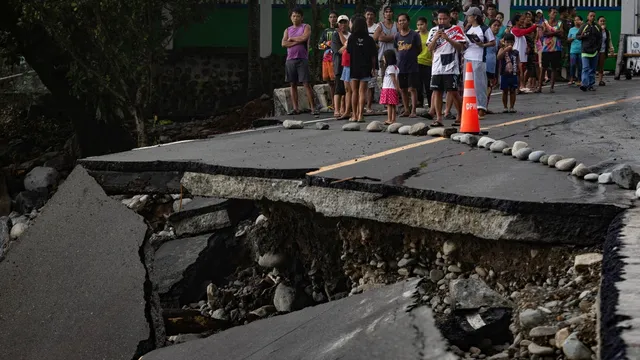
In the aftermath of devastating typhoons that resulted in over 250 fatalities and displacing more than one million people in the Philippines, meteorologists have raised concerns regarding the potential for further extreme weather events. Typhoon Kalmaegi and Super Typhoon Fung-wong recently struck the country, leading to discussions about the influence of the La Nina weather system. Although the La Nina conditions are expected to be milder and potentially shorter-lived, experts warn that the Philippines is not yet safe from additional tropical storms before the end of 2025. Authorities are currently dealing with destruction on Luzon, the Philippines' largest island, while they anticipate further climatic impacts, including weakened wind shear which could result in more active hurricane seasons in the region. Dr. Samantha Burgess from the Copernicus Climate Change Service explained that La Nina typically enhances the potential for hurricane formation as it disrupts conditions that would ordinarily suppress storm development. The presence of La Nina has been linked to the recent devastation caused by Hurricane Melissa, which impacted Jamaica and other Caribbean regions, indicating a broader trend of extreme weather related to this climate phenomenon. While the current La Nina event is deemed mild, historical patterns suggest that such conditions often lead to heavier rainfall and increased storm activity, fostering greater concern for vulnerable areas like the Philippines and even eastern Australia, where flooding is also anticipated in the wake of these systems. Although forecasters, including Nicholls, acknowledge that La Nina is usually expected to be on the weaker side, its unpredictable nature leaves room for uncertainty regarding the severity of its impacts. The complexity of these climatic patterns means that not all factors that contribute to their intensity are understood, making it challenging for scientists to predict the full scope of future weather events. The situation remains precarious for the Philippines as the country reconvenes after multiple natural disasters, heightening the urgency for precautionary measures and response strategies against an uncertain climatic future. As La Nina runs its course, forecasters encourage ongoing vigilance against future tropical impacts. Given the recent history of destructive storms in the region, the potential for even more severe weather events raises critical questions about disaster preparedness and response in the Philippines. The metrological community stresses the importance of being proactive rather than reactive in facing the challenges posed by climate variations fueled by phenomena like La Nina.
Context
The impact of La Niña on typhoons in the Philippines plays a crucial role in understanding the meteorological patterns that affect the region, especially in terms of weather changes and disaster preparedness. La Niña, characterized by cooler-than-average sea surface temperatures in the Pacific Ocean, typically leads to increased rainfall and storm activity in the Philippines. This phenomenon significantly alters the typical behavior of typhoons, often resulting in stronger and more frequent storm occurrences during the La Niña years. Historical data indicates that the Philippines experiences a surge in typhoon activity during La Niña events, which can have devastating implications for the country's agriculture, infrastructure, and communities, particularly those in vulnerable coastal areas. Research shows that during La Niña, the enhanced convective activity in the western Pacific can lead to more intense typhoons, with potential wind speeds reaching catastrophic levels. This increase in intensity is partly due to favorable atmospheric conditions that include the reduction of vertical wind shear and an abundance of moist air. These conditions not only facilitate the formation of typhoons but also contribute to their rapid intensification as they approach the Philippines. Moreover, the eastward shift in the position of the typhoon formation region during La Niña episodes can result in typhoons making landfall with increased likelihood and severity. The implications of such meteorological phenomena extend beyond immediate impacts; they also raise important questions about disaster management and preparedness in the Philippines. The government and local agencies must enhance their forecasting capabilities and invest in infrastructure that can withstand stronger typhoons. This involves not only improving early warning systems but also developing comprehensive disaster response strategies tailored to the unique challenges posed by La Niña and its interaction with typhoon formation. Collaboration among various stakeholders, including scientists, government officials, and local communities, is vital for effective risk reduction and climate adaptation strategies. To mitigate the impacts of La Niña on typhoons, ongoing research and analysis are essential. Studies should focus on improving predictive models that can accurately forecast typhoon occurrences and their potential paths during La Niña phases. Additionally, initiatives aimed at raising public awareness regarding the effects of climate variability on typhoon activity are necessary to ensure communities are better prepared for future events. Through increased understanding and proactive measures, the Philippines can enhance resilience against the destructive forces of nature, particularly the dual impact of La Niña and typhoons.


