

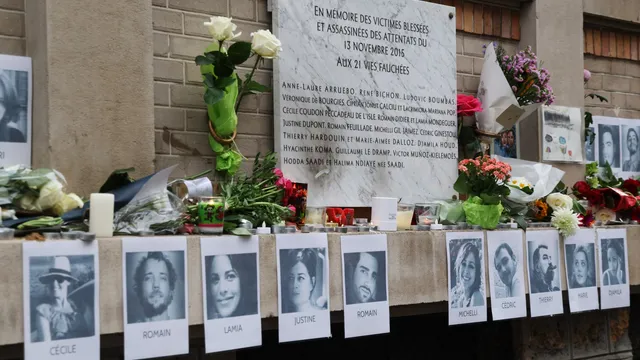
France honors the 130 victims of the November 2015 attacks
France honors the 130 victims of the November 2015 attacks
- On November 13, 2025, France commemorated the 10th anniversary of the deadly attacks that left 132 people dead.
- The events included ceremonial tributes led by officials at various attack sites, emphasizing the ongoing struggle for survivors.
- These commemorations highlight both the deep scars left by the attacks and the resilience of the French people in the face of continued threats.
Story
Ten years after a series of coordinated terrorist attacks in France, the nation is paying tribute to the 132 victims who lost their lives on November 13, 2015. The attacks, orchestrated by Islamic State militants, resulted in multiple suicide bombings and shootings at various locations in Paris, including the Bataclan concert hall, Stade de France, and several café terraces. The tragic events left over 500 people injured, and many survivors continue to struggle with the emotional and psychological aftermath. President Emmanuel Macron and Paris Mayor Anne Hidalgo led the commemorative ceremonies, which involved a minute of silence and wreath-laying at each attack site. As France navigates the world ten years later, the reflections on this somber event highlight the ongoing healing process for survivors and families of the victims. Survivors like Arthur Denouveaux, who escaped the Bataclan, shared their insights, stating that the pain never fully goes away, but rather evolves into a different way of living. The threat of terrorism, highlighted by recent arrests related to jihadist plots, continues to loom, casting a shadow over the nation's collective memory and national security. The commemorative events included the inauguration of the new memorial garden, the "November 13 Memory Garden," aimed at honoring the memories of those lost during the attacks. This memorial, located opposite City Hall, features granite stones engraved with the names of the victims as a reminder of the tragedy that shook France and the need for memory and unity in the face of ongoing challenges. Overall, the sense of solidarity that emerged during the aftermath of the attacks remains a vital part of French identity today. The anniversary ceremonies have also served as a stage for addressing broader issues surrounding security, immigration, and social cohesion in the wake of violent extremism. As discussions surrounding these topics continue, a collective commitment to remembrance and resilience is emphasized through various tributes, ensuring that the victims' legacies endure.
Context
The November 2015 attacks in Paris marked a pivotal moment in French society, reshaping the nation’s perceptions of security, identity, and community. On the night of November 13, multiple coordinated terrorist attacks resulted in 130 fatalities and hundreds of injuries, primarily targeting the Bataclan concert hall, bars, and restaurants in the city's sixth and eleventh arrondissements. The attacks were orchestrated by the Islamic State and highlighted vulnerabilities in France's security apparatus, sparking nationwide outrage and solidarity. In the aftermath, a palpable sorrow and fear permeated French life, catalyzing debates on national identity, secularism, and the integration of diverse communities within the country. In response to the tragedy, the French government implemented a series of security measures aimed at preventing further attacks. These included prolonged states of emergency, increased police presence, and enhanced intelligence gathering, demonstrating the state’s commitment to protecting its citizens. However, these measures also led to concerns about civil liberties, as many citizens began to feel the tightening grip of state authority in everyday life. Activists and community leaders cautioned against fostering an environment of distrust among different religious and ethnic groups, urging instead for a collective healing process that honors the victims while promoting unity and resilience against extremism. The attacks also ignited a national discourse on the principles of laïcité, or secularism, which is a cornerstone of French identity. Following the events, discussions regarding the place of Islam in French society intensified, with many calling for a clear distinction between the religion itself and the radical ideology that motivated the attackers. The rise of anti-Muslim sentiments was noted, leading to incidents of discrimination and violence against Muslims, which further complicated the social fabric of the nation. Community measures such as interfaith dialogues and cultural events emerged as pivotal strategies for reconciliation, aiming to bridge divides and foster understanding in a time of fear and uncertainty. Additionally, the November 2015 attacks had profound implications for France’s role in global geopolitics, particularly regarding its stance on terrorism and foreign policy. France's military interventions in the Middle East were scrutinized, with critics arguing that its actions either provoked violence or were insufficient in combating terrorism. The government's response was twofold: reinforcing its commitment to fight terrorism abroad while maintaining a firm approach to national security. As France continues to grapple with the legacy of the attacks, the ongoing dialogue about security, freedom, and identity remains crucial to navigating the challenges of a post-terror era and fostering a cohesive society.


