
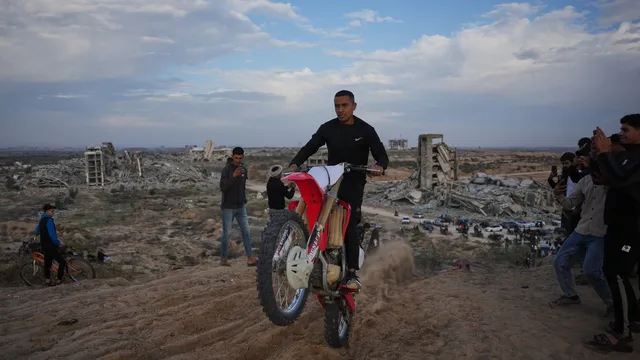
Young men in Gaza revive motorcycle traditions amid ceasefire
- Motorcycles and all-terrain vehicles have returned to the sand dunes in Gaza, showcasing young men's skills and spirit.
- Before the conflict, gatherings at the dunes were a weekly tradition that provided joy and community bonding.
- The revival of these activities amid a ceasefire highlights the community's resilience and desire to reclaim normalcy.
Story
The central Gaza town of Al Zahra has seen a resurgence of young people engaging in traditional recreational activities following a period of intense conflict. Previously, the sand dunes in this region served as a popular gathering spot for youths every Friday before the war disrupted their lives. In a noteworthy shift during a fragile ceasefire, these young men have resumed riding motorcycles and all-terrain vehicles, displaying their skills by flying over the dunes and performing stunts. This revival marks an important step toward reclaiming a sense of normalcy and community amidst the devastation and displacement resulting from the ongoing conflict. As the dust settles on a series of violent clashes that displaced many, the community's desire for connection and leisure is undeniable. These moments in the dunes not only provide a reprieve from the harsh realities of life in Gaza, but they also foster camaraderie among the participants, who reminisce about the prewar days when gatherings at the dunes were routine. The sounds of roaring engines and cheers fill the air as these young individuals embrace the thrill of riding, celebrating moments of joy and freedom that have become increasingly rare. The sand dunes represent more than just a playground for these youths; they symbolize resilience and hope. Their willingness to engage in such activities amidst the backdrop of conflict reflects a collective yearning for peace and the return of daily life. The dunes have long been a place of social interaction and cultural expression, serving as a canvas for the youthful exuberance of Gaza's younger generation. This return to tradition invites reflection on the impact of war not only on physical spaces but also on social dynamics and personal identities. In the context of ongoing tensions and the uncertain future of the region, these gatherings underscore the importance of maintaining cultural practices and traditions. They highlight a generation that seeks to carve out moments of normalcy while navigating the complexities of life in an area marked by conflict. As motorcycles rev and tires kick up sand, the youth of Gaza not only reclaim their environment but also reaffirm their identity and shared history, creating a tapestry of resilience woven amid uncertainty.
Context
The ongoing conflict in Gaza has profoundly affected the youth, shaping their development, psychosocial well-being, and future prospects. Children and adolescents living in the region frequently experience trauma from violence, loss, and instability, which severely disrupts their education and socialization. Many families in Gaza struggle to provide basic needs, leading to high levels of poverty and unemployment. This economic strain further exacerbates the challenges faced by the youth, limiting their access to quality education and healthcare. The environmental impacts of war, including destruction of infrastructure and unsafe living conditions, compound their struggles, ultimately creating a cycle of despair that is difficult to break. Psychosocial issues manifest in various forms among the youth in Gaza, including anxiety, depression, and post-traumatic stress disorder (PTSD). The fear of violence, recurrent bombings, and loss of loved ones create an environment where emotional responses can stifle personal growth and development. Many young people suffer from low self-esteem and a lack of hope for the future, feeling trapped in a conflict that seems unending. Support systems, such as mental health services and community programs, have been overwhelmed by the rising demand, and access to such resources remains limited. In schools, the focus on coping with trauma and the disruption of the educational curriculum hinder academic progress, leading to increased dropout rates. The impact of conflict extends beyond psychological and educational concerns, as many youths are also recruited into armed groups. This militarization of youth creates an additional layer of vulnerability, as those who are involved in conflict often face long-term consequences, including legal repercussions and further exposure to violence. For some young individuals, participating in armed conflict may seem like the only avenue for empowerment or economic opportunity in a landscape of hopelessness and deprivation. This not only perpetuates a cycle of violence but also forests a generation that may be increasingly desensitized to the conflict, impacting future peace prospects. To address the complex needs of youth affected by war in Gaza, it is critical to establish integrated approaches that combine educational support, mental health services, and community engagement initiatives. International organizations, local NGOs, and government agencies must collaborate to create safe environments for young people, promoting resilience through psychosocial support and educational opportunities. Comprehensive programs addressing trauma and skill development can empower youth and enable them to envision a future beyond the conflict. Creating systems that support the well-being of children and adolescents is essential for breaking the cycle of violence and fostering a healthier, more peaceful community in Gaza.
