

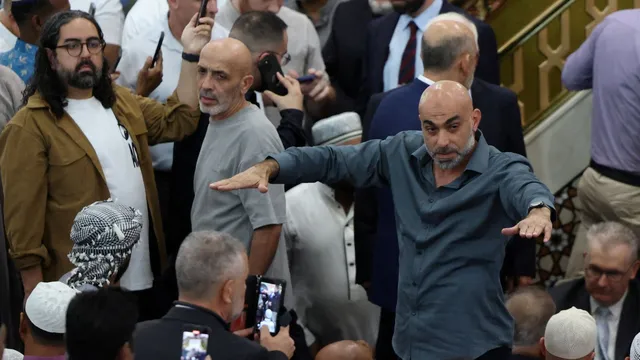
Protesters confront Australian PM Albanese during Eid prayers
Protesters confront Australian PM Albanese during Eid prayers
- During Eid celebrations on March 20, 2026, Australian Prime Minister Anthony Albanese was confronted by protesters at Lakemba Mosque.
- Attendees expressed strong opposition to his government's stance on the Israeli-Palestinian conflict, resulting in heckling and demands for him to leave.
- The incident highlights the rift between the government and certain communities in Australia, particularly in light of rising Islamophobia.
Story
On March 20, 2026, a significant confrontation took place at Lakemba Mosque in Sydney, Australia, when Prime Minister Anthony Albanese attended Eid celebrations. The gathering marked the conclusion of Ramadan, a vital event for the Muslim community. During the prayers, Albanese and Home Affairs Minister Tony Burke faced intense protests from attendees who were expressing their discontent regarding the government's stance on the ongoing conflict in Gaza involving Israel and Hamas. As tensions escalated, demonstrators referred to the Prime Minister as a 'putrid dog' and a 'genocide supporter', highlighting the deep divisions and emotions surrounding the issue. Despite the hostile reception, Albanese later described the overall atmosphere as 'incredibly positive', claiming that most attendees did not express dissent. He suggested that the sight of a few hecklers should be contextualized within the larger crowd of 30,000 people. However, video footage revealed significant disruption, with protesters yelling for the politicians to leave and criticizing their support for Israel amidst increasing casualties among Palestinians. The event symbolizes the growing frustration within parts of the Muslim community in Australia toward the government's approach to international conflicts that they feel impact their community directly. The mosque's secretary, Gamel Kheir, attempted to restore order during the protests, indicating the need for dialogue between the Muslim community and political leaders. His remarks emphasized the importance of engaging with politicians in a respectful manner, despite the frustrations felt by many attendees. Kheir's call for calm reflected the broader desire for constructive conversation rather than confrontation, especially during a communal celebration such as Eid. However, the gathered crowd's response demonstrated the complexity of the situation and the ongoing tensions surrounding Australia's foreign policy. Following the event, reactions were mixed, as some in the community expressed feeling marginalized and neglected by the government amidst rising Islamophobia. The incident at the mosque serves as a reminder of the delicate dynamics between political leaders and their constituents, particularly in communities heavily impacted by international issues. It reflects a growing discontent regarding how the Australian government handles sensitive matters related to foreign policy and its implications for local populations. The rising incidence of Islamophobia in the country further complicates the relationship and may lead to increased calls for accountability and representation from the government, underscoring the need for more profound understanding and engagement with minority communities in Australia.
Context
Racism and political representation in Australia is a critical issue that directly impacts the lives of many citizens, particularly those from marginalized communities. Historically, Australia has struggled with racial discrimination, which has often inhibited the political representation of Indigenous Australians, migrants, and people of color. Disparities exist in participation rates, access to political resources, and opportunities for leadership within political institutions. Consequently, these communities are often underrepresented in decision-making processes that affect their lives, leading to policies that do not address their needs or reflect their interests adequately. The political landscape in Australia remains predominantly white, with the majority of elected officials coming from Anglo-Celtic backgrounds. This homogeneity results in a narrow interpretation of issues affecting diverse populations. For instance, policies regarding immigration, healthcare, education, and social services are frequently crafted without the input of those directly impacted by such decisions, perpetuating a cycle of disenfranchisement. Furthermore, when individuals from minority backgrounds do gain political office, they often face additional scrutiny, bias, or marginalization, potentially influencing their ability to represent their constituents effectively. Efforts to improve political representation for marginalized communities include initiatives aimed at increasing voter turnout and engagement among these groups. Educational programs that inform individuals about the political process, the importance of voting, and the impact of lobbying can empower communities that have historically been left out. Additionally, advocacy for structural changes within political parties, such as diversity quotas or representation agreements, plays a vital role in fostering an inclusive political environment where all Australians can see their experiences reflected in their leaders. Ultimately, addressing racism and improving political representation in Australia is essential for creating a more equitable society. Systematic changes and greater awareness of the unique challenges faced by marginalized communities are necessary to ensure that all Australians can participate fully in the democratic process. By promoting diversity within political institutions, Australia can enhance the effectiveness of its governance and create policies that are inclusive and equitable, benefiting all citizens.


