

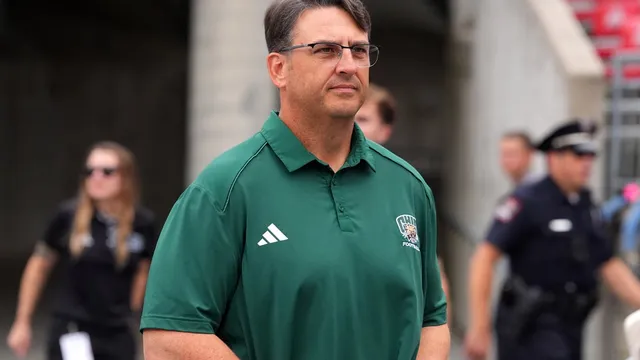
Ohio University terminates Brian Smith for alcohol policy violations
Ohio University terminates Brian Smith for alcohol policy violations
- Brian Smith was fired by Ohio University after an administrative review revealed serious professional misconduct related to alcohol use.
- Smith admitted to violating the school's alcohol policy by storing alcohol in his office and consuming it during work hours.
- The university has begun searching for a permanent head coach and appointed John Hauser as interim head coach.
Story
In the United States, Brian Smith was fired as head football coach of Ohio University following allegations of serious professional misconduct related to alcohol use. His dismissal came after an administrative review found that he had violated both the university's alcohol policy and terms of his employment agreement. These allegations surfaced after an 8-4 season, which put Smith's coaching tenure at less than a year. He was previously placed on paid administrative leave on December 1, 2024, due to an investigation into his conduct. Details from Smith's personnel file indicated a meeting held on November 24, 2024, between Smith and university officials, during which he reportedly admitted to storing alcohol in his desk drawer and consuming it during office hours. He also acknowledged that assistant coaches occasionally joined him for drinks in his office after games. According to Ohio University's employee policy, consumption or possession of alcohol at work is strictly prohibited, which formed the basis of the termination. Coach Smith's attorney, Rex Elliott, publicly disputed the reasons for the termination and labeled it as wrongful. He claimed that Smith did not drink while under the influence and emphasized that these actions did not affect his performance as a coach. Elliott expressed his client's shock and disappointment, reinforcing Smith's ethical reputation and commitment to the university community. He insisted that they would fight to protect Smith's good name. As a result of Smith’s termination, Ohio University appointed defensive coordinator John Hauser as interim head coach. Hauser will lead the Bobcats in an upcoming bowl game against the University of Nevada Las Vegas on December 23, 2025. Ohio University announced that they will begin the search for a permanent head football coach immediately. Smith's abrupt firing has sparked controversy and raises questions about the standards of conduct expected from coaches within the collegiate sports system.
Context
geopolitical shift strategic analysis market market impact strategic analysis shift policy impact geopolitical impact policy analysis policy data data market geopolitical shift global market policy data shift market insight geopolitical impact impact insight global global economic policy geopolitical global data trends geopolitical trends insight analysis trends geopolitical strategic shift economic shift policy geopolitical trends economic analysis strategic insight market data insight impact data trends geopolitical market shift economic strategic strategic policy policy data insight global shift trends impact geopolitical trends...


