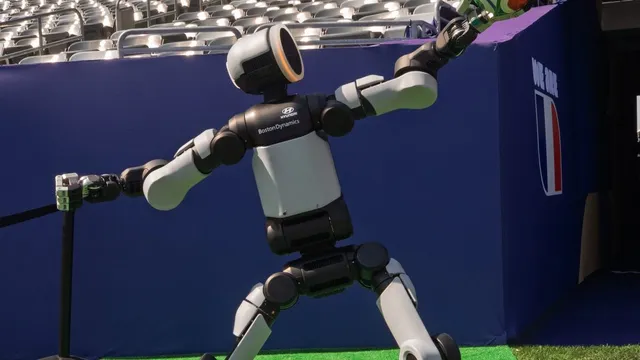
In a groundbreaking event at the World Cup, a humanoid robot named Atlas delivered the match ball during the Brazil versus Norway game. This moment, witnessed by 80,000 spectators in the stadium and a global television audience, marked a significant milestone in robotics and sports. Developed by Boston Dynamics and sponsored by Hyundai Motor Company, Atlas is a fifth-generation humanoid robot designed for complex tasks. The preparation for this event took five years, involving extensive training that allowed Atlas to learn soccer techniques by analyzing footage of professional players and adapting to various playing surfaces.
Atlas is equipped with 56 degrees of freedom, enabling it to perform intricate movements. Unlike traditional robots that follow fixed programming, Atlas learns through training, developing behaviors based on experience. This innovative approach involved using motion capture data from human engineers to teach the robot how to navigate different environments, including grass and concrete. The training process was intensive, allowing Atlas to acquire skills that would typically take a human athlete a year to master in just 24 hours.
The event was not just a demonstration of technological advancement but also a strategic move by Hyundai Motor Company, which has been a FIFA sponsor for 27 years. Sungwon Jee, the executive vice president of Hyundai, emphasized that this moment was about entering public consciousness and showcasing the potential of robotics in everyday life. The appearance of Atlas at such a prestigious event signifies a shift in how robots are perceived and their role in society.
As Atlas continues to be tested in various settings, including automotive manufacturing, the implications of its capabilities extend beyond sports. Hyundai views robotics as a core component of its future strategy, aiming to integrate advanced technology into its operations. The successful delivery of the match ball by Atlas not only highlights the advancements in robotics but also sets the stage for future interactions between humans and machines in various fields.