
military conflicts
tragic
catastrophic

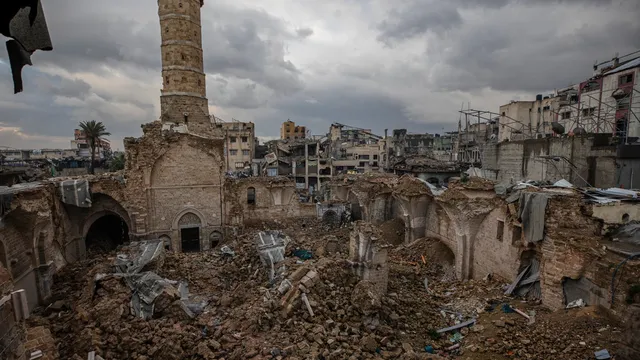
Israeli strikes destroy historic Great Omari Mosque in Gaza

Feb 13, 2026, 5:30 AM10
(Update: Feb 13, 2026, 5:30 AM)
citizens and nationals of Israel
Palestinian political and military organization

Israeli strikes destroy historic Great Omari Mosque in Gaza

  • The Great Omari Mosque in Gaza was historically significant and served as a place of worship for centuries.
  • Israeli strikes have severely damaged the mosque, leading to concerns about the loss of Palestinian heritage.
  • The destruction reflects broader issues within the ongoing Israel-Hamas conflict regarding cultural identity and preservation.
Share opinion
Tip: Add insight, not just a reaction
1

Story

In Gaza, the Great Omari Mosque, a historic site that has served as a place of worship for centuries, was significantly damaged due to Israeli strikes amid prolonged conflict with Hamas. Muneer Elbaz, a Palestinian heritage consultant, expressed sorrow over the destruction, comparing it to a tree uprooted from the ground. The mosque, built on a site where a Byzantine church once stood, had become emblematic for many Gazans, symbolizing resilience and the cultural identity of the Palestinian people. The Israeli military, while claiming its actions targeted Hamas military assets, did not provide concrete evidence to support these claims. Witnesses and heritage experts like Issam Juha expressed concern about the broader implications of such destruction, stating that it erases important cultural elements linked to the Palestinian narrative. With ongoing violence and a frail ceasefire, many fear that historic sites are becoming collateral damage in a conflict that has seen extensive loss on both sides. UNESCO also acknowledged some damage to the historic church complex but lacks the mandate to pinpoint responsibility for the devastation. As rebuilding efforts begin, Palestinians like Mohammad Shareef mourn the loss of not just a building, but a repository of memories where generations gathered for prayers and significant life events. The mosque stood as more than just a physical structure; it represented a spiritual home and a connection to an intertwined history that has shaped their identity through the ages. Many Gazans see the destruction as an assault on their heritage and a broader threat to the preservation of their cultural identity. In the aftermath of such destruction, there are calls for careful evaluation of cultural sites within conflict zones to ensure that their heritage is not lost permanently. The ongoing situation raises questions about the balance between military objectives and the preservation of civilian structures, highlighting the need for greater sensitivity and accountability in wartime actions. Overall, the situation serves as a stark reminder of the intricate link between culture, identity, and conflict in the region.

Context

policy market policy trends market strategic insight economic insight strategic shift market economic policy insight economic geopolitical insight data economic strategic market market shift insight policy policy global global strategic policy market data insight impact geopolitical insight policy analysis policy global shift trends policy insight geopolitical shift analysis trends insight policy global policy global policy policy insight geopolitical insight market geopolitical insight data data geopolitical shift market insight data global global trends impact shift global market strategic data policy policy...

2026 All rights reserved
