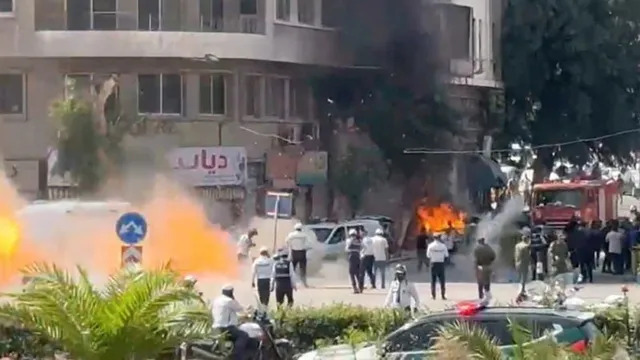
On July 7, 2026, two bombs detonated in a busy area of Damascus, Syria, near the hotel where French President Emmanuel Macron was staying. The blasts occurred shortly after Macron's convoy left the hotel, heading to the presidential palace for scheduled talks with Syrian President Ahmed al-Sharaa. Local media reported that at least 18 people were wounded, including four police officers, as a result of the explosions. The Syrian Interior Ministry confirmed that the blasts were caused by improvised explosive devices, one of which was hidden in a parked car and the other in a roadside trash bin.
The explosions took place outside the security perimeter established for Macron's visit, which meant that there was no direct threat to him or his delegation. Macron's office stated that he was unaware of the blasts and continued with his planned meetings. Images later released showed Macron engaging with al-Sharaa and other Syrian officials, indicating that the visit proceeded as scheduled despite the incident.
This visit marked a significant moment as it was the first by a European Union head of state to Syria since the ousting of President Bashar Assad by jihadist leader Ahmed al-Sharaa in December 2024. The context of the visit is crucial, as it reflects the evolving political landscape in Syria and the potential for diplomatic engagement between the EU and the Syrian government. The lack of immediate claims of responsibility for the bombings adds to the uncertainty surrounding security in the region.
The incident raises questions about the safety of foreign dignitaries visiting Syria and the ongoing challenges faced by the Syrian government in maintaining security. As the situation develops, it will be important to monitor the responses from both the Syrian authorities and the international community regarding the implications of this attack on diplomatic relations and security in the region.