

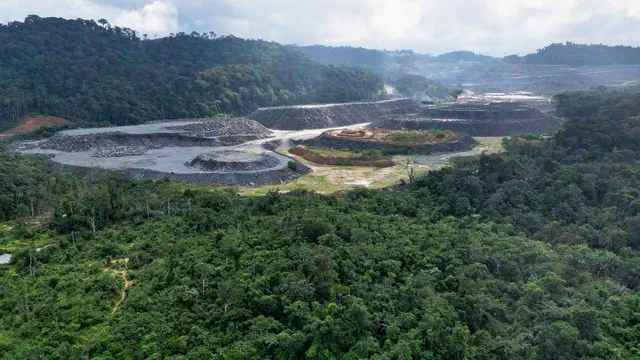
Bea Mountain spills toxic chemicals in Liberia's waterways
Bea Mountain spills toxic chemicals in Liberia's waterways
- Bea Mountain Mining Corporation faced multiple spills of cyanide, arsenic, and copper exceeding legal limits.
- Local villagers reported health issues and environmental damages from these spills.
- The investigation highlights the need for greater corporate accountability and regulatory enforcement in Liberia.
Story
In Liberia, between July 2021 and December 2022, the largest gold mining company, Bea Mountain Mining Corporation, faced scrutiny due to multiple toxic spills involving cyanide, arsenic, and copper. The Environmental Protection Agency (EPA) documented that these spills occurred from substandard mining facilities at levels exceeding the legal limits set by the government. Investigations revealed that after one such incident in 2022, local villagers experienced fish deaths and alleged health issues, leading to claims of inadequate response measures from the company and regulatory bodies. Notably, the spills impacted not only the environment but also the local community's well-being. Despite exporting over $576 million worth of gold during this period and contributing $37.8 million to the government, Bea Mountain allocated only a fraction, $2 million, or 0.35% of its revenues, to environmental and social programs for local communities. This raised critical questions about the company’s accountability and commitment to sustainable practices. Moreover, reports indicated that Bea Mountain delayed notifying authorities after spills and obstructed government inspectors from assessing the laboratory results regarding their environmental measures. This lack of transparency compounded the concerns voiced by local residents, who felt the adverse effects of the spills. The EPA's responses indicated failures in the regulatory measures, with only one penalty applied in the past years—a reduced fine after a significant spill incident. The ongoing controversies around Bea Mountain’s operations underscore the tension between economic gain from gold mining and the environmental responsibilities that companies hold in locales such as Liberia. Stakeholders are anxious to see improvements from the mining operations amid calls for more rigorous oversight to prevent such environmental hazards in the future. In response to the escalating situation, MKS PAMP, the Swiss refiner processing gold from this mine, stated they would conduct an independent assessment of the site. They indicated that if improvements in health and safety standards did not materialize, they would consider cutting ties with Bea Mountain. This reflects a growing awareness and concern among global supply chains regarding the origins and ethical implications of their sourced materials. Such scrutiny may prompt not only regulatory changes but also elevate community voices demanding safety and accountability from major corporations involved in natural resource extraction.
Context
Liberia, a country on the west coast of Africa, faces a variety of pressing environmental issues that threaten its rich biodiversity and the livelihoods of its people. Deforestation is one of the most significant challenges, largely due to illegal logging, agricultural expansion, and the extraction of natural resources. The country's vast rainforests, which are home to numerous endemic species, are being rapidly depleted. As forests are cleared, the natural habitats of wildlife are destroyed, leading to increased human-wildlife conflict and a loss of biodiversity. Furthermore, the loss of trees contributes to climate change, as forests play a critical role in carbon sequestration. The effects of climate change, including irregular rainfall and rising temperatures, further exacerbate the vulnerability of Liberia's ecosystems and agricultural systems. In addition to deforestation, Liberia struggles with pollution and waste management challenges. Urban areas, particularly the capital city Monrovia, are plagued by inadequate waste disposal systems, leading to the accumulation of solid waste in waterways and streets. This not only poses a health risk to the population but also affects local ecosystems, as pollutants enter rivers and coastal areas. Water pollution from industrial activities, mining operations, and agricultural runoff further exacerbates the situation, threatening the health of aquatic life and contaminating drinking water sources. Efforts to manage waste and reduce pollution have been hindered by a lack of infrastructure, resources, and public awareness, necessitating urgent intervention to improve environmental conditions. Another critical environmental issue in Liberia is the impact of mining, particularly in relation to its natural resources. While mining provides essential revenues, it also poses significant risks to the environment. The extraction processes often lead to land degradation, deforestation, and water pollution. The communities surrounding mining areas experience disruptions in their livelihoods, as agriculture becomes increasingly challenging due to the contamination of land and water. The need for environmentally sustainable mining practices is paramount to ensure that natural resources contribute to economic development without compromising the health of the environment and local communities. To address these environmental challenges, Liberia must adopt an integrated approach that combines conservation efforts, sustainable resource management, and community involvement. Engaging local communities in conservation initiatives can foster stewardship of the environment and ensure that development goals align with ecological preservation. Strengthening policies that protect forests, improving waste management systems, and promoting responsible mining practices will be essential in mitigating environmental degradation. International cooperation and support will also be vital in assisting Liberia to address these pressing issues, as global environmental challenges require collective action to ensure a sustainable future.


