
technology
innovative
impactful

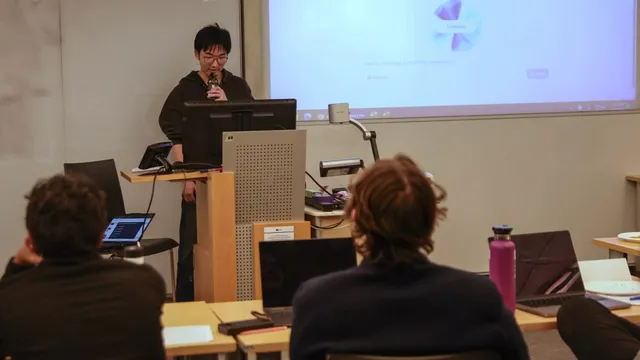
Cornell professor combats AI use with oral exams in classroom

Apr 23, 2026, 2:00 AM10
(Update: Apr 23, 2026, 2:00 AM)
private and statutory land-grand research university in Ithaca, New York, USA
Biomedical Engineer

Cornell professor combats AI use with oral exams in classroom

  • Chris Schaffer at Cornell University introduced oral defenses to address concerns about AI misuse in education.
  • Emily Hammer at the University of Pennsylvania is pairing oral exams with written assignments to counteract students' declining cognitive skills.
  • Increasing reliance on AI has prompted a significant shift towards oral exams across universities as educators seek to ensure true understanding.
Share opinion
Tip: Add insight, not just a reaction
1

Story

In the evolving educational landscape, several universities in the United States are re-evaluating their assessment methods due to the increasing use of generative AI by students. A significant development occurred at Cornell University, where Chris Schaffer implemented an oral defense method in his biomedical engineering class last semester. This approach aims to foster direct interaction between students and instructors. Educators like Schaffer believe that traditional written assignments are losing their reliability, prompting a return to oral exams as a means to ensure genuine understanding and retention of knowledge. Moreover, the University of Pennsylvania has seen Emily Hammer, an associate professor, similarly integrating oral exams with written assignments in her seminar classes. Her initiatives arise from concerns about students' diminishing cognitive skills and creativity from relying on AI for their work. Despite such measures, Hammer recognizes the challenge of enforcing restrictions against AI use in writing assignments, highlighting a struggle many in academia are facing. The urgency of the situation is underscored by faculty workshops on oral exams, which aim to prepare educators for adapting to this new academic environment. Meanwhile, Panos Ipeirotis at NYU's Stern School of Business introduced an innovative AI-powered oral exam for his class on AI product management. This novel format involved students conversing with an AI agent utilizing a voice cloned from the professor. Although initial feedback was mixed, with some students feeling awkward speaking to a screen, Ipeirotis plans to implement this format in future classes, reflecting a commitment to evolving educational practices in response to technological advances. Many educators across disciplines express concern regarding students bypassing critical thinking skills through easy access to AI tools. They fear that such lax practices could hinder students' preparedness for advanced academic and professional challenges. Through the reintroduction of oral exams, educators aim to encourage active engagement and ensure students have a firm grasp of the material, ultimately contributing to their success in both current studies and future careers.

2026 All rights reserved
