

Israel bombards synagogue during Passover in Tehran
Israel bombards synagogue during Passover in Tehran
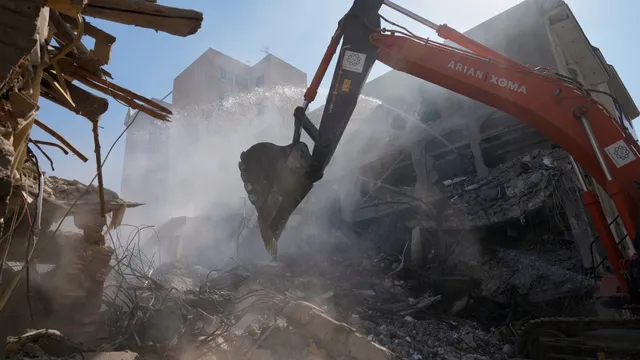
- An airstrike in Tehran resulted in the destruction of the historic Rafi-Nia Synagogue during Passover, a major Jewish holiday.
- Iranian Jewish leaders condemned this attack, emphasizing the importance of the synagogue in their community.
- The incident has intensified tensions between Israel and Iran, drawing international attention to the implications for religious freedom in the region.
Story
In March 2026, Jerusalem was embroiled in controversy after an airstrike in Iran targeted an area central to Tehran, impacting the historic Rafi-Nia Synagogue, a significant Jewish religious site. Reports indicated that the strike occurred during Passover, a sacred time for Jewish communities, leading to outcry from local Iranian Jewish leaders who condemned the destruction of one of their sacred places of worship. As per Iranian media, the intended target was a nearby residential building, but the strike resulted in collateral damage to the adjacent synagogue, raising tensions between Israel and Iran. In the aftermath of the strike, Iranian Jewish representative Homayoun Sameh expressed deep concern, condemning the attack for its impact on the Jewish community during a traditional holiday. The destruction was characterized as a grievous blow not only to the physical structure of the synagogue but also to the cultural heritage of Jews in Iran, which has long been described as a sanctuary for religious pluralism. Iranian officials declared that such attacks compromise the ethos of tolerance that has historically been associated with the Iranian identity. Statements from Iranian leaders emphasized the synagogue’s importance, noting that it served as a congregational space for Khorasan Jews. The reports also indicated widespread damage to the surrounding residential areas, exacerbating community fears of instability. An Israeli official dismissed claims that Israel targets synagogues, framing the military actions as necessary responses to threats against civilians. This narrative reiterated Israel's stance of targeting terrorist infrastructure rather than religious sites. As the geopolitical tensions simmer, the ramifications of this strike are likely to foster a deeper divide, further complicating the relationships between the communities and their respective governments. The recent rhetoric from both sides suggests heightened animosities and a possible escalation in hostilities during a period that is meant for reflection and celebration for Jewish communities worldwide.
Context
Military actions have profound and multifaceted effects on religious communities, often exacerbating existing tensions and challenging the fabric of social cohesion. When armed conflicts arise, religious groups can become embroiled in the violence, either as active participants or as targets of hostility. This dynamic can lead to the polarization of communities along religious lines, with groups becoming defensive or aggressive to protect their identities and beliefs. For example, in regions where ethnic identity is closely tied to religion, military actions can fuel sectarian violence, creating an atmosphere of distrust and animosity among different faith communities. The psychological impact on individuals within these communities can be devastating, leading to trauma, loss of faith, or radicalization among the vulnerable or marginalized groups who feel abandoned by societal support structures. These outcomes can lead to further cycles of violence, making reconciliation efforts more challenging after the cessation of hostilities. Moreover, the direct impact of military actions on religious institutions cannot be overlooked. Places of worship may become targets for attacks or be repurposed for military uses, resulting in the destruction of cultural heritage and the displacement of worshippers. This destruction can stymie community resilience and lead to an erosion of spiritual, cultural, and historical narratives that have bonded communities for generations. The impact extends beyond immediate physical damage; it can signify a loss of identity and belonging for individuals within affected religious communities. Such actions often lead to a crisis of faith, where individuals question their beliefs amidst suffering and devastation, further complicating their social reintegration following conflicts. On a broader scale, military actions can alter the landscape of interfaith relations, either positively or negatively. In some instances, the shared experience of suffering can bring various religious groups together, fostering dialogue and collaborative efforts for peacebuilding. Humanitarian responses from religious organizations often serve as bridges between communities, as they work toward healing and reconstruction. These initiatives can promote inter-religious cooperation, emphasizing shared values and the common goal of restoring order and stability in post-conflict settings. However, such potential for positive change may be thwarted by the prioritization of military objectives over humanitarian considerations, leading to a failure in addressing the spiritual and emotional needs of affected communities and potentially entrenching divisions further. In conclusion, the effects of military actions on religious communities are complex and varied, engendering both destructive and constructive outcomes. It is vital for policymakers and military leaders to consider the implications of their actions on religious groups during and after conflicts. Incorporating religious leaders and communities in peace processes and recognizing their role in humanitarian efforts can lead to more sustainable resolutions to conflict. Rather than viewing religion solely as a source of division, recognizing its potential as a unifying force could play a crucial part in rebuilding societies ravaged by war, ultimately fostering environments conducive to lasting peace.


