

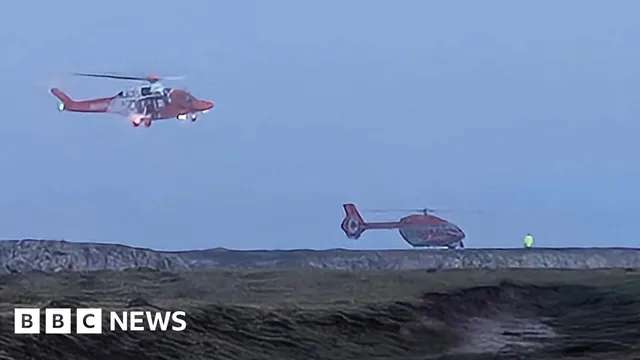
Major rescue launched for three climbers stranded on Pembrokeshire coast
Major rescue launched for three climbers stranded on Pembrokeshire coast
- Emergency services were called to St Govan's Head in Pembrokeshire around 16:00 GMT on February 12, 2026, due to an incident involving three rock climbers.
- Rescue efforts included multiple teams and helicopters to locate and assist the climbers.
- This incident highlights the risks associated with climbing in the region, prompting discussions about climber safety.
Story
On February 12, 2026, a significant rescue operation was initiated off the Pembrokeshire coast in Wales, following an emergency involving three rock climbers. The incident occurred around 16:00 GMT at St Govan's Head, a location known for its towering limestone cliffs that reach heights of up to 40 meters. As rescue teams mobilized, they included personnel from Fishguard, St Govans, and Tenby, alongside an HM Coastguard helicopter and support from the Irish Coastguard. Additionally, two Wales Air Ambulances and an RNLI lifeboat from Angle were dispatched to the scene to assist the climbers and ensure their safe recovery. St Govan's Head is not only a striking natural landscape but also a popular destination for rock climbing enthusiasts. The area boasts approximately 300 recognized climbing routes, some of which are categorized as extremely challenging and dangerous. Climbs are often graded beyond Hard Very Severe, arriving at levels as difficult as Extreme 8. Certain routes, such as 'Army Dreamers' and 'The Butcher', have achieved classic status among the climbing community in the UK. The inherent risks associated with climbing in this region are significant; some areas contain unstable rock formations that pose hazards to climbers. Additionally, it’s essential to note that the cliffs at St Govan's Head are periodically closed to climbing during spring and summer months to protect nesting sea birds, which further complicates the climbing conditions during peak periods. The involvement of various emergency services in the rescue operation highlights not only the urgency of the situation but also the potential dangers faced by climbers in this renowned climbing destination. As police and rescue teams worked collaboratively to evacuate the climbers, the effective coordination among agencies was crucial in addressing the potential life-threatening circumstances. The incident underlines the importance of safety measures and awareness for climbers, particularly in treacherous coastal terrains. The rapid mobilization of multiple rescue teams served as a testament to the preparedness of local emergency services to handle such emergencies along the Pembrokeshire coastline. This event showcases both the allure and the peril of engaging with the stunning yet hazardous rock formations that attract numerous adventurers each year, emphasizing the dual aspects of thrill and danger inherent to the sport of climbing.


