

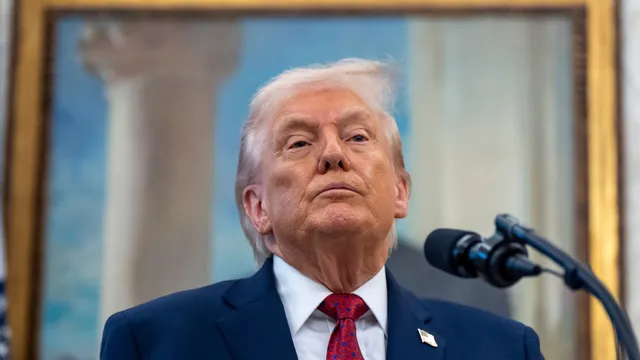
Donald Trump blames Rob Reiner's death on Trump Derangement Syndrome
Donald Trump blames Rob Reiner's death on Trump Derangement Syndrome
- Rob Reiner and his wife were found dead at their Los Angeles home, with their son arrested for the suspected murder.
- Donald Trump's comments about Reiner's death drew intense criticism from celebrities and public figures, who called his statements insensitive.
- The incident sparked a wider discussion about the political divide and the tone of public discourse in America.
Story
In the United States, Rob Reiner, an acclaimed director and vocal critic of former President Donald Trump, was found dead alongside his wife Michele on December 14, 2025, in their Los Angeles home. Their son, Nick Reiner, has been arrested on suspicion of murder. Following the tragic incident, Donald Trump made a controversial statement via Truth Social, attributing Rob Reiner's death to what he described as Trump Derangement Syndrome, a term he uses to criticize his opponents. This statement has drawn widespread backlash from various public figures and celebrities, who condemned the tone and insensitivity of Trump's comments. Actor Patrick Schwarzenegger labelled the remarks as 'disgusting and vile', while talk show host Jimmy Kimmel referred to Trump’s remarks as 'hateful' and 'vile', prompting many to demand a more compassionate response from the president during such a time of mourning. In stark contrast, President Joe Biden issued a brief statement expressing condolences to the Reiner family and honoring their contributions to the arts. The differing reactions illustrate the deep political divide within American society, especially in the wake of a tragedy involving a public figure known for his liberal activism. The Reiner family's spokesperson requested privacy as they navigate their grief following this shocking event.
Context
Rob Reiner is a prominent figure in both the film industry and the political landscape in the United States. Having gained fame as an actor, director, and producer, Reiner is best known for his work in the 1970s television series "All in the Family" and for directing classic films such as "When Harry Met Sally," "A Few Good Men," and "The Princess Bride." His cinematic contributions have not only garnered critical acclaim but have also resonated with audiences, touching on themes of love, friendship, and moral complexities. Through his direction, Reiner has demonstrated an ability to blend humor with significant social messages, making his films both entertaining and thought-provoking. The success of these films established him as a key player in Hollywood and earned him a dedicated fan base. In addition to his accomplishments in film, Reiner has been actively involved in various political causes and advocacy efforts. He has used his platform to push for social change, particularly in matters related to civil rights, health care, and free speech. As a vocal supporter of Democratic candidates and progressive policies, Reiner has participated in campaigns, fundraisers, and public speaking engagements to advocate for issues he is passionate about. His commitment to political activism is reflected in various initiatives he has supported, such as the fight for net neutrality, gun control measures, and the importance of voter engagement. Reiner's conviction that artists have a responsibility to influence public discourse has driven him to leverage his fame for the greater good. Moreover, Reiner co-founded the American Foundation for Equal Rights (AFER), which played a significant role in the legal battle against California's Proposition 8, which sought to ban same-sex marriage. His involvement in this high-profile case underscored his dedication to LGBTQ+ rights and equal treatment under the law. This activism highlighted not only his commitment to social justice but also the intersection of his artistic career with his political beliefs. By participating in initiatives that align with his values, Reiner has carved out a legacy that extends beyond entertainment, making a tangible impact on society. Overall, Rob Reiner's contributions to film and politics have established him as an influential figure whose work crosses boundaries between art and advocacy. His films, celebrated for their storytelling and emotional resonance, complement his efforts to champion social justice and civil rights. Reiner's ongoing commitment to activism serves as an example of how creatives can engage with pressing societal issues, inspiring others in the industry to pursue similar paths. Through both his films and his political endeavors, he continues to make strides in promoting positive change and ensuring that his voice contributes to important conversations in American society.


