

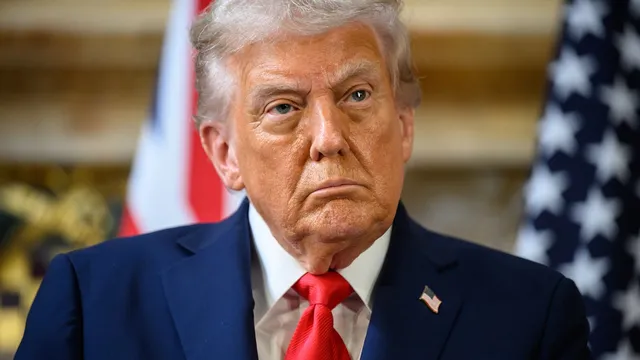
Trump demands unconditional surrender from Iran following military strikes
Trump demands unconditional surrender from Iran following military strikes
- The U.S. launched a military campaign against Iran in March 2026 during Operation Epic Fury.
- Trump's conditions for a resolution include Iran's full surrender and the establishment of a new government.
- The military actions have already caused significant loss of leadership in Iran and raised questions about future governance.
Story
In early March 2026, the United States, under President Donald Trump, initiated a military campaign against Iran, dubbed Operation Epic Fury, in collaboration with Israel. The offensive began following escalating tensions and marked a significant escalation in U.S. military activity in the region. Seven days into the conflict, Trump articulated his conditions for any potential resolution, insisting on Iran's unconditional surrender and the selection of new leaders acceptable to the U.S. His statements drew parallels to historical demands made during World War II, aiming to dismantle the current Iranian regime and establish a more favorable government in Tehran. White House press secretary Karoline Leavitt confirmed that Trump would take an active role in selecting Iran's new leadership following the death of Supreme Leader Ali Khamenei during the conflict. This operation has already resulted in significant military achievements, including the targeting of high-ranking Iranian officials and military assets. However, the long-term implications of this conflict remain uncertain, raising questions about governance in Iran post-conflict and the potential for regional destabilization. Trump's administration has signaled its commitment to reshaping Iran's future economically and politically while addressing security threats posed by the Iranian regime, which has been accused of supporting terrorism and pursuing nuclear capabilities.
Context
Iran's pursuit of nuclear weapons has been a contentious issue in international relations, marked by a complex history of ambitions, negotiations, sanctions, and geopolitical tensions. The origins of Iran's nuclear program date back to the 1950s when the United States and Iran entered the Atoms for Peace Program, which aimed to promote the peaceful use of nuclear energy. This early cooperation laid the groundwork for Iran's eventual development of nuclear technology, although it was primarily focused on civilian applications. Following the 1979 Islamic Revolution, Iran's nuclear ambitions were further emphasized, significantly altering its relationship with Western powers and leading to greater scrutiny of its nuclear activities. Throughout the 1980s and 1990s, Iran accelerated its nuclear program, particularly after facing significant conflicts, such as the Iran-Iraq War. The country sought assistance from various sources, including Russia and China, which helped it establish key nuclear infrastructure. The international community began to express increasing concern regarding Iran's intentions, with fears that it might seek nuclear weapons capability under the guise of a civilian energy program. This anxiety led to efforts by the United States and its allies to engage Iran diplomatically, but these efforts often foundered due to mutual distrust and repeated violations by Iran of its commitments under the Non-Proliferation Treaty (NPT). The turning point came in the early 2000s when revelations about undisclosed nuclear sites and undisclosed activities prompted the International Atomic Energy Agency (IAEA) to launch investigations. In 2006, the UN Security Council imposed the first round of sanctions against Iran, highlighting the increasing concern over its nuclear ambitions. Despite these measures, Iran continued its nuclear enrichment activities, asserting that its program was entirely peaceful and aimed at meeting domestic energy needs. The situation escalated further, culminating in the negotiations that led to the Joint Comprehensive Plan of Action (JCPOA) in 2015, wherein Iran agreed to limit its nuclear activities in exchange for relief from economic sanctions. This multilateral agreement was hailed as a significant diplomatic achievement, but also faced immediate criticism and skepticism regarding Iran's compliance and the adequacy of the measures in preventing a nuclear weapons breakout. The U.S. withdrawal from the JCPOA in 2018 under the Trump administration marked another pivotal moment, leading to a re-imposition of harsh sanctions on Iran. As a response, Iran gradually began to exceed the limits set in the JCPOA, raising tensions in the region and prompting fears of renewed conflict. The Biden administration has since aimed to revive negotiations, yet the path forward remains fraught with challenges, including Iran's continued uranium enrichment, regional geopolitical dynamics, and the broader implications for security in the Middle East. As of 2026, the future of Iran's nuclear program continues to be uncertain, reflecting an ongoing struggle between diplomacy and military considerations in addressing the potential threats posed by nuclear proliferation.


