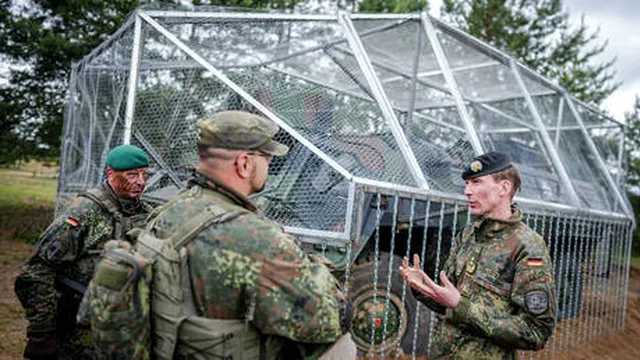
Germany's obligations to NATO and its military strategy are critical components of its national defense policy and its role within the transatlantic alliance. As a founding member of NATO, Germany is committed to the principles of collective defense as outlined in Article 5 of the North Atlantic Treaty, which states that an armed attack against one member is considered an attack against all. This commitment has been reaffirmed in various NATO summits and is a cornerstone of Germany's security policy. In recent years, Germany has increased its defense spending to meet NATO's guideline of 2% of GDP, reflecting its dedication to fulfilling its obligations and enhancing its military capabilities. This increase is also a response to evolving security threats, particularly from Russia and the instability in the Middle East and North Africa.
Germany's military strategy is shaped by its historical context and its current geopolitical environment. The Bundeswehr, Germany's armed forces, have undergone significant reforms since the end of the Cold War, transitioning from a conscription-based force to a professional military. This transformation has aimed to create a more agile and capable force that can respond to a range of security challenges, including conventional warfare, counter-terrorism, and cyber threats. Germany has also emphasized the importance of multinational cooperation, participating in various NATO missions and EU operations, which enhances its operational readiness and interoperability with allied forces.
In recent years, Germany has taken on a more prominent role in NATO's collective defense initiatives, particularly in Eastern Europe. The deployment of German troops to NATO's Enhanced Forward Presence in the Baltic States and Poland demonstrates Germany's commitment to deterring aggression and reassuring its allies. Additionally, Germany has been involved in various crisis management operations, such as the Resolute Support Mission in Afghanistan and the fight against ISIS, showcasing its willingness to contribute to global security efforts. These actions align with Germany's strategic objective of promoting stability in its neighborhood and beyond, while also addressing the security concerns of its NATO partners.
Looking ahead, Germany faces several challenges in fulfilling its NATO obligations and executing its military strategy. The need for modernization of its military equipment and infrastructure is paramount, as many of its systems are outdated and require significant investment. Furthermore, Germany must navigate the complexities of domestic politics, where public opinion on military engagement can be divided. Balancing these internal and external pressures will be crucial for Germany as it seeks to maintain its role as a leading member of NATO and a reliable partner in international security. Overall, Germany's NATO obligations and military strategy reflect its commitment to collective defense, its historical lessons, and its proactive approach to contemporary security challenges.