

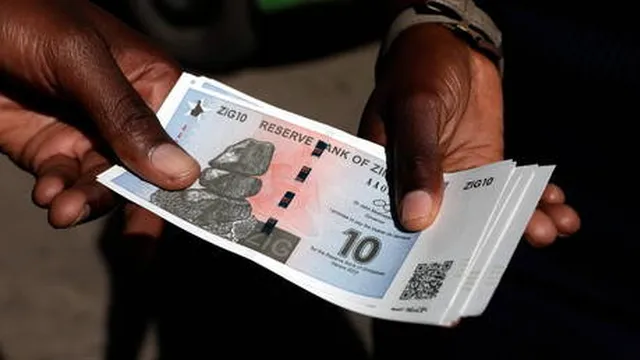
Zimbabwe central bank claims currency is undervalued against dollar
Zimbabwe central bank claims currency is undervalued against dollar
- Zimbabwe's gold-backed currency, the ZiG, is currently valued at 25 to the US dollar, yet the Reserve Bank believes it should be at 15.
- Governor John Mushayavanhu indicated that the current valuation reflects weak market confidence in the currency.
- The central bank aims to restore trust in the ZiG and reduce dependency on the US dollar.
Story
Zimbabwe's economic landscape has been significantly shaped by the introduction of the gold-backed currency, known as the ZiG, which was launched in April 2024. This new monetary unit aimed to address the severe inflation and depreciation issues faced by the former Zimbabwe dollar, which had severely undermined the country's economic stability. The Reserve Bank of Zimbabwe, under the leadership of Governor John Mushayavanhu, indicated that the current official rate of the ZiG against the US dollar is around 25, considerably higher than its perceived true value of approximately 15. Mushayavanhu revealed that if the bank were to buy back all local currency in circulation with its reserves, it could manage the currency at this more favorable exchange rate. As of June 2025, Zimbabwe reported gold reserves of 3.4 metric tons, indicating a solid backing for the currency, yet transactions in US dollars still constitute over 90% of the national economy. This ongoing reliance on the US dollar illustrates the confidence crisis that the ZiG faces among businesses and the general public. In a 2026 monetary policy statement, the Reserve Bank disclosed a noteworthy increase in foreign currency reserves, rising from $276 million in April 2024 to $1.2 billion by December 2025. This change comes alongside a reduction in inflation to single digits and a maintenance of exchange-rate stability. Despite these positive indicators, businesses in Zimbabwe express a prevailing skepticism regarding the local currency, viewing its recent stability as artificial and not sustainable. The Confederation of Zimbabwe Industries (CZI) highlighted these concerns in a December report, emphasizing the critical need for stronger market confidence in the ZiG. Highlighting the challenges in rebuilding trust in the currency, Mushayavanhu candidly admitted that the ZiG's current undervaluation reflects a lack of confidence in the central bank and the local currency itself. The concerns over managing the exchange rate prompted the International Monetary Fund (IMF) to issue a warning about the central bank's practices, indicating that it continues to intervene heavily in the currency market by selling foreign exchange. This level of intervention raises questions about the viability and true strength of the gold-backed currency in a country still attempting to heal from past economic mismanagement. As Zimbabwe navigates these complexities, the central bank is focused on restoring trust and confidence among both businesses and consumers to stabilize the local currency. The long-term goal remains to reduce reliance on the US dollar while gradually fostering greater use of the ZiG, enhancing the sovereignty of Zimbabwe's monetary policy and economic resilience.


