

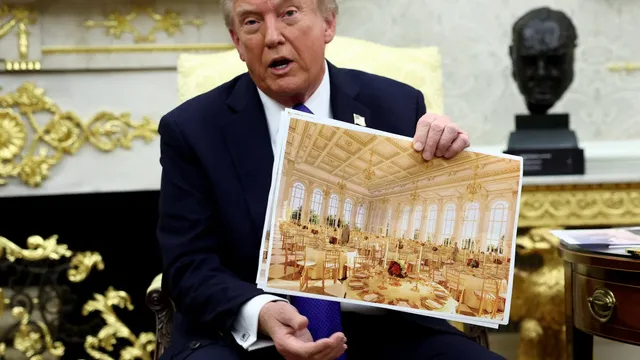
Democrats propose restrictions on Trump’s controversial ballroom funding
Democrats propose restrictions on Trump’s controversial ballroom funding
- Democrats have introduced legislation to impose donation restrictions to Trump's ballroom project.
- The proposed bill mandates reporting of donor information to enhance transparency.
- This bill reflects concerns about corruption in political fundraising and governance.
Story
In recent months, a significant political move has emerged in the United States involving a proposed bill by Democratic lawmakers aimed at regulating private donations for a controversial $300 million ballroom project associated with President Donald Trump. This project, which has seen the East Wing of the White House demolished for the construction of a lavish 90,000 square-foot space, has raised concerns among Democrats about potential corruption and lack of transparency in political donations. Massachusetts Senator Elizabeth Warren called the situation a 'pay-to-play scheme,' citing that wealthy donors and corporations appear to be contributing substantial sums to facilitate their own interests with the Trump administration. Moreover, only a fraction of the listed donors has been transparent, raising questions about the integrity of the funding sources. This bill proposes that the National Park Service disclose donor names, donation amounts, and any meetings with officials on a quarterly basis, seeking to bring accountability to the funding process. Proponents of the legislation, including Connecticut Senator Richard Blumenthal, argue that it is designed to prevent corruption and put a stop to the influence of wealth over governmental projects, ensuring that public property is not used for personal vanity projects by officials. However, the bill currently lacks support from Republican co-sponsors and is unlikely to pass through the Republican-controlled Congress, challenging its potential to become law. This situation reflects ongoing concerns regarding the intersection of wealth and political power, raising questions about ethical governance and the implications for democracy within the United States, especially in light of ongoing allegations of corruption and conflicts of interest tied to the Trump administration’s dealings with foreign leaders and entities.
Context
data economic policy insight market geopolitical analysis analysis analysis policy economic impact geopolitical market data impact data market geopolitical geopolitical insight insight analysis shift insight global geopolitical market global trends impact economic economic shift strategic economic shift analysis impact insight economic insight insight trends data economic trends global global market insight market data global data data insight market trends analysis policy global strategic insight trends insight global strategic data impact insight policy impact policy economic strategic analysis insight impact data...


