

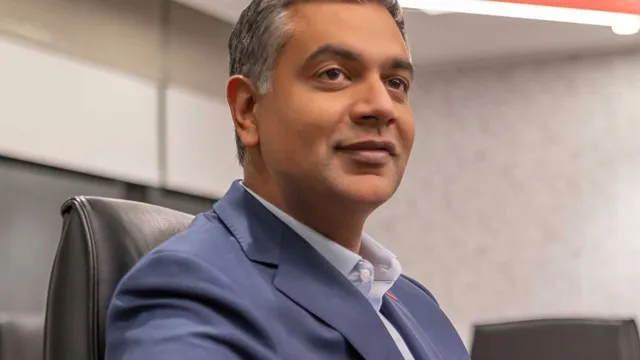
CEO Sam Sidhu uses AI clone to lead company earnings call
CEO Sam Sidhu uses AI clone to lead company earnings call
- During Customers Bank's recent earnings call, CEO Sam Sidhu revealed that an AI clone of himself led the first part of the meeting.
- The initiative aims to emphasize the bank's commitment to integrating artificial intelligence into its operations.
- This innovative approach positions Customers Bank as a pioneer in becoming one of the first AI-enabled regional banks in the U.S.
Story
In a groundbreaking demonstration of technology's potential, Customers Bank recently conducted an earnings call where CEO Sam Sidhu revealed that he was not the one delivering the prepared remarks. Instead, an AI replica of Sidhu led the call for the initial 30 minutes, showcasing the bank's ongoing efforts in integrating artificial intelligence within its operations. This event took place during a call to discuss the bank’s first-quarter financial results with analysts, highlighting a notable shift in how companies might engage in investor relations. The underlying strategy of this approach is to draw attention to the AI-driven transformation happening at Customers Bank. The institution has entered into a multi-year contract with OpenAI, aiming to innovate its technology and business processes through AI applications. This significant partnership is set to embed engineers from OpenAI within the bank’s structure and deploy AI agents across various commercial banking operations. As a result, Customers Bank is poised to become one of the first AI-enabled regional banks in the United States, as stated in the organization's official press release. Founded under the belief that technology can alleviate repetitive tasks, Sidhu emphasized that the move towards AI is not about replacing critical human capabilities but rather about freeing employees to focus on their core strengths. With approximately 75% of the bank's employees now utilizing AI tools, and nearly 600 of them having participated in an AI masterclass, the bank is committed to investing in its workforce’s ability to effectively use these technological advancements. The use of AI clones by CEOs is increasingly becoming a trend, with other industry leaders joining Sidhu in adopting similar strategies. In recent months, notable figures such as Meta's Mark Zuckerberg and Zoom's Eric Yuan have also introduced AI versions of themselves for various corporate functions, ranging from employee engagement to earnings calls. The implications of these developments suggest a future where AI can assist not only executives but potentially the entire workforce in handling mundane or administrative tasks, thereby reshaping the typical work environment.
Context
The impact of AI clones in corporate leadership has emerged as a significant area of investigation as technological advancements continue to reshape the landscape of business management. AI clones, or sophisticated algorithms designed to replicate human behavior and decision-making processes, are increasingly being integrated into corporate structures. The potential benefits they offer, such as improved data analysis, enhanced efficiency, and predictive modeling capabilities, highlight the transformative role of AI in decision-making roles traditionally held by human leaders. By employing AI clones, companies can leverage vast amounts of data to inform strategic decisions in real-time, leading to potentially unprecedented levels of operational efficiency and competitive advantage. However, the adoption of AI clones also raises critical questions regarding governance, ethics, and the potential erosion of human oversight within leadership roles. As organizations integrate AI systems into their decision-making frameworks, concerns about the transparency of these systems and the algorithms that drive them have come to the forefront. The opacity of AI decision-making processes can result in challenges related to accountability and trust, which are essential components of effective leadership. Furthermore, there is the risk of creating a workforce that is overly reliant on AI for decision-making, which could stifle creativity and undermine the human intuition that is often crucial in navigating complex business environments. Moreover, the impact of AI clones on corporate culture and employee dynamics cannot be overlooked. While AI can deliver speed and accuracy, it can also disrupt traditional power structures and alter interpersonal relationships within organizations. The presence of AI as a leader or part of the leadership team may lead to resistance from employees who feel threatened by technology encroaching on roles that require emotional intelligence and ethical judgment. To successfully navigate these challenges, organizations must focus on developing frameworks that ensure AI complements human leadership rather than replaces it. Fostering a culture of collaboration between AI and human leaders can enhance decision-making processes while preserving the human elements that are vital to organizational success. In conclusion, the impact of AI clones in corporate leadership presents both opportunities and challenges that must be thoroughly addressed. Through strategic implementation and a commitment to ethical standards, businesses can harness the benefits of AI clones while mitigating potential risks. As the corporate landscape evolves, it is essential that leaders remain vigilant about the implications of AI in their organizations, ensuring that technology serves to empower rather than diminish the role of human leadership.


