

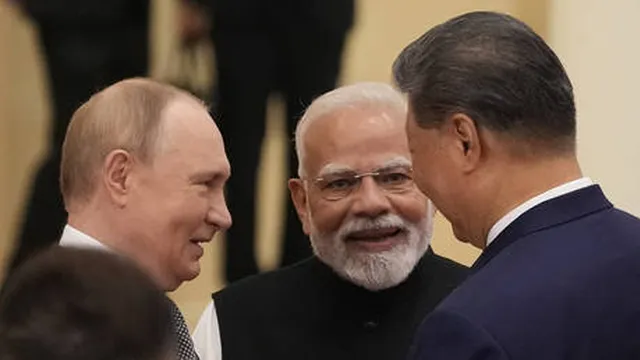
Xi Jinping highlights the significance of China-India relations amidst challenges
Xi Jinping highlights the significance of China-India relations amidst challenges
- Chinese President Xi Jinping praised the strengthened relationship between China and India during India's Republic Day.
- Ties between the nations are seen as vital for global peace, despite historical border tensions.
- The recent developments indicate a shift towards improved cooperation between the two countries.
Story
In a recent message on India's Republic Day, Chinese President Xi Jinping conveyed warm greetings and referred to China and India as 'good neighbors, friends, and partners'. He asserted that the ties between the two nations are crucial for fostering world peace and prosperity. In Xi's view, the transformative phrase 'dragon and elephant dancing together' signifies the potential for collaboration despite their historical challenges. Relations between China and India saw significant strain following a deadly border clash in 2020, which caused heightened military presence on both sides of the 3,800 km border. However, diplomatic efforts have made progress since 2024, marked by meetings between Xi and Indian Prime Minister Narendra Modi on the sidelines of global summits, aiming to resolve tensions and strengthen cooperation. The atmosphere cooled in the subsequent years, evidenced by resumed direct flights and eased visa restrictions between the two nations. Additionally, India's intent to lift restrictions on Chinese companies for government contracts, imposed post-clash, showcases a thaw in bilateral relations. Amid growing U.S. sanctions against Russia and pressures to drive a wedge between nations, Xi's congratulatory message underscores the significance of unity and cooperation in a volatile geopolitical landscape. While challenges remain, both leaders are committed to enhancing connections and addressing mutual concerns. Xi's statement reflects a timely push towards healthier relations, with an eye to expanding exchanges and addressing shared challenges in the future. The analysis of recent China-India dynamics illustrates how historical tensions may evolve into constructive partnerships, provided both nations continue prioritizing dialogue and collaboration. As they navigate this path, Xi's optimistic outlook underscores a renewed focus on partnerships for greater stability and growth in the region.
Context
The historical relationship between China and India is marked by a complex interplay of cooperation and conflict, shaped by cultural exchanges, territorial disputes, and geopolitical dynamics. Ancient interactions between the two civilizations featured trade along the Silk Road, the spread of Buddhism from India to China, and cultural exchanges that contributed to their respective civilizations. However, this harmonious backdrop gave way to contention during the 20th century, particularly following the decolonization of Asia. The 1962 Sino-Indian War drastically altered relations, establishing a pattern of suspicion and rivalry that has continued into the 21st century. Territorial disputes, such as those in Aksai Chin and Arunachal Pradesh, remain unresolved and have frequently flared into diplomatic tensions and military skirmishes. In the post-war era, both countries initially sought a peaceful coexistence, exemplified by the Panchsheel Agreement of 1954, which emphasized mutual respect for sovereignty and territorial integrity. Nevertheless, the divergent political ideologies of the two nations—Communist China and democratic India—led to a fundamental distrust. The subsequent decades saw periods of both engagement and estrangement, with India aligning more with Western powers while China deepened ties with countries in South Asia and beyond. The growing assertiveness of China, particularly under Xi Jinping, including its Belt and Road Initiative, has prompted India to strengthen its regional partnerships and respond to perceived encroachments on its influence. The economic aspect of China-India relations has potential as a unifier, with both nations being major emerging markets in the global economy. Bilateral trade has seen substantial growth, making China one of India's largest trading partners. Yet, trade relations have also faced challenges, particularly with trade imbalances and accusations of unfair practices. Initiatives aimed at enhancing economic cooperation, such as the Regional Comprehensive Economic Partnership (RCEP), indicate a recognition of mutual benefits, yet political tensions often overshadow these economic opportunities. Furthermore, the COVID-19 pandemic has placed additional strain on these relations, as geopolitical narratives shifted towards national security and self-reliance. In recent years, border tensions have escalated once again, most notably during the 2020 Galwan Valley clash, which resulted in casualties on both sides and highlighted the fragility of peace along the Line of Actual Control. As both countries continue to rise on the global stage, they must navigate their competing interests and priorities. The future trajectory of China-India relations will likely depend on their ability to manage longstanding disputes while fostering cooperation in areas such as trade, climate change, and regional security. Establishing consistent dialogue and confidence-building measures will be vital in avoiding conflict and promoting stability, enabling both nations to harness their historical ties for mutual benefit.


