

US Navy destroys Iranian vessels, escalates conflict
US Navy destroys Iranian vessels, escalates conflict
- The United States has conducted a massive bombing campaign against Iranian navy vessels since February 28.
- Iran's naval forces have largely been rendered ineffective, though the IRGC's asymmetric capabilities remain a threat.
- The ongoing conflict has escalated tensions in the region, impacting maritime shipping security.
Story
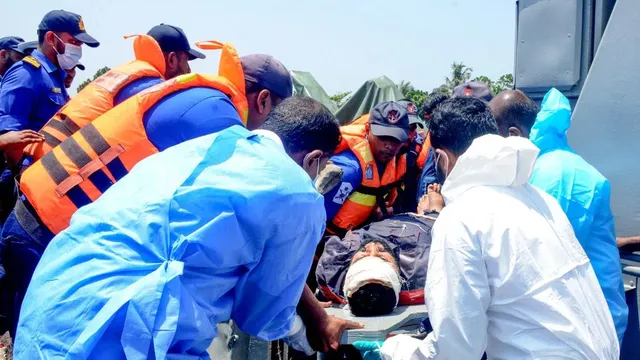
The United States has significantly diminished Iran's naval capacity through a series of military operations that began on February 28. As a result of this offensive, 60 Iranian vessels were sunk, highlighting a determined campaign to cripple Iran's conventional navy. The destruction includes key vessels such as Iran's two Mowj-class warships, the Alvand-class frigate Sabalan, and the forward-basing ship Makran, essential for Iran's power projection capabilities. This unprecedented strike not only devastated the naval fleet but also indicated the reach and intent of the U.S. military strategy in the region. Following these actions, expert analyses emphasize that while Iran's conventional navy is now largely combat ineffective, the Islamic Revolutionary Guards Corps (IRGC) maintains its ability to threaten shipping in the Persian Gulf through asymmetric warfare tactics. The IRGC has been able to adjust its naval doctrine to emphasize fast-attack boats and other unconventional methods of naval warfare, making it capable of executing surprise attacks against civilian shipping, which is crucial given that 20% of global oil supplies transit through the Strait of Hormuz. Despite the destruction of much of the traditional navy, Iran's approach has transitioned toward maintaining a sustained threat via unconventional naval strategies, including the usage of unmanned surface vessels (USVs) configured as floating bombs and shore-based anti-ship missile capabilities. This shift has allowed Iran to continue asserting influence and control over significant maritime routes, causing alarm amongst international stakeholders dependent on the security of these shipping lanes. In a tragic counterpart to these events, the sinking of the Iranian warship Iris Dena by a U.S. submarine on March 4 led to the deaths of 84 Iranian sailors. This incident has been described as a significant escalation in the ongoing conflict. The aftermath involves repatriation efforts for the deceased and further condemnation from Iranian officials, with the Iranian Foreign Minister vowing that such actions by the United States would not go unchallenged. As the military hostilities escalate, concerns about the potential for broader regional conflict and implications for global oil supply security are rising.
Context
The naval capacity of Iran has been the subject of significant analysis, particularly in the context of geopolitical tensions and military engagements involving the United States. The Islamic Republic of Iran has consistently prioritized naval power as a critical component of its defense strategy, focusing on asymmetric warfare capabilities. Following recent attacks attributed to the U.S., Iran's naval strategy emphasizes deterrence and regional influence, particularly in the Strait of Hormuz, a vital chokepoint for global oil shipments. Iran's naval forces, including the Islamic Revolutionary Guard Corps Navy (IRGCN), are equipped with small, fast vessels and a variety of missiles designed to target larger enemy ships, displaying an approach that leverages agility and stealth over traditional naval engagement methods. This strategy reflects Iran's recognition of its limitations regarding conventional naval forces and its decision to adapt its military capabilities to asymmetric principles that can complicate U.S. operations in the region. In response to perceived threats and the need to secure its maritime borders, Iran has increased its investment in naval platforms that enhance its surveillance, reconnaissance, and offensive capabilities. The development of domestically produced submarines, drones, and missile technology has allowed Iran to project power and deter naval adversaries. The utilization of anti-access and area denial (A2/AD) strategies is evident as the Iranian navy conducts regular exercises to demonstrate its readiness and technological advancements. These exercises also serve as a means of psychological warfare against the U.S. and its allies, asserting Iran's ability to disrupt maritime operations in the Gulf and beyond. Iran's naval strategy has also extended to forging alliances and conducting joint exercises with other nations possessing significant naval capabilities, such as Russia and China. These collaborations enhance Iran's operational capabilities and provide a platform for sharing naval tactics and technologies. Moreover, by showcasing its naval strength through such partnerships, Iran can strengthen its position in the region while countering U.S. influence. The geopolitical landscape thus remains tense, with Iran continuously seeking to bolster its naval capabilities in anticipation of potential military engagements while also leveraging its maritime strength as a tool for broader diplomatic negotiations. The challenges and dynamics surrounding Iran's naval capacity post-U.S. attacks illustrate how regional powers adapt their military doctrines. While facing sanctions and limitations in conventional military spending, Iran has focused on innovations and a strategic shift towards cyber warfare and hybrid strategies. This evolution emphasizes the importance of non-traditional naval operations, where smaller vessels, asymmetrical tactics, and enhanced electronic warfare capabilities play pivotal roles. Collectively, Iran's naval capacity serves as both a defensive mechanism against U.S. military actions and as an offensive tool to assert its dominance in the region's waterways, underscoring the complexity of modern naval power in unfolding geopolitical scenarios.


