

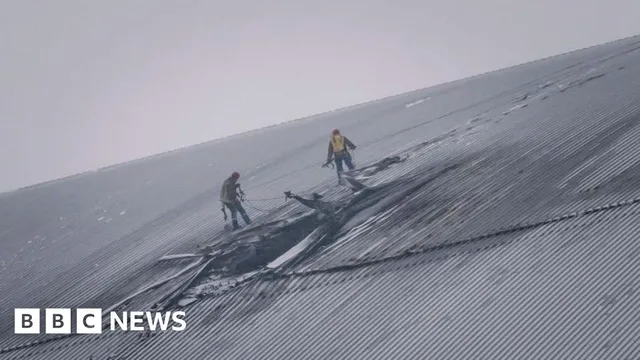
Chernobyl radiation shield loses main safety function after drone strike
Chernobyl radiation shield loses main safety function after drone strike
- A protective shield at the Chernobyl nuclear reactor has been found to have lost its main containment capability.
- The damage was due to a drone strike, which ignited a fire in the shield's outer cladding.
- IAEA warns that immediate repairs are crucial for ensuring long-term nuclear safety at the site.
Story
In recent months, Ukraine has faced continued tensions with Russia, leading to conflicts that have included targeted attacks on vital infrastructure. One significant incident occurred earlier this year when a drone strike severely damaged the protective shield covering the Chernobyl nuclear reactor. This structure was originally constructed following the catastrophic explosion in 1986, which released substantial amounts of radioactive material into the atmosphere, resulting in a public health crisis across Europe. The International Atomic Energy Agency (IAEA) conducted assessments and confirmed that the massive shield, designed to prevent the release of radioactive contamination, has now lost its primary safety functions. The IAEA's inspectors highlighted the severity of the damage caused by the drone strike, which resulted in a fire affecting the outer cladding of the protective structure. Their findings emphasized that this shield is critical in containing radioactive dust and that repairs are essential to prevent further degradation. Environmental experts, such as Jim Smith from the University of Portsmouth, have commented that while the situation is serious, there is no immediate cause for panic. The contamination risk remains low, largely due to the original concrete sarcophagus that confines radioactive materials since the 1986 disaster. The IAEA has underscored the importance of timely restoration activities to ensure sustained nuclear safety at Chernobyl. Rafael Grossi, the IAEA director general, stated that ongoing assessments of Ukraine's energy infrastructure are vital, especially as the country continues to defend itself from Russian military actions. Additionally, the use of electricity for reactor cooling and other safety systems is critical, as well as maintaining the capability to distribute the power generated to households and industries. The current conflict continues to pose threats not only to human life but also to the safety of nuclear facilities. To sum up, the protective measures surrounding the Chernobyl nuclear site face significant challenges as a result of recent unwarranted attacks, and the IAEA's calls for repairs highlight the precariousness of the situation. Addressing these safety concerns is essential in mitigating risks associated with the aftermath of past nuclear events and in navigating present military conflicts.


