

UK government commits to releasing Andrew Mountbatten-Windsor trade role files amid scandal
UK government commits to releasing Andrew Mountbatten-Windsor trade role files amid scandal
- MPs have voted in favor of releasing documents related to Andrew Mountbatten-Windsor's role as a trade envoy.
- Mountbatten-Windsor faces allegations of sharing sensitive information with Jeffrey Epstein.
- The UK government is working quickly to respond to calls for transparency amidst ongoing investigations.
Story
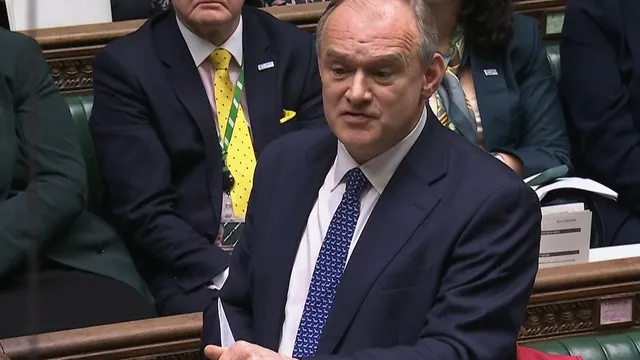
In the UK, significant developments have unfolded regarding Andrew Mountbatten-Windsor, the former prince, who served as the UK’s special representative for international trade and investment from 2001 to 2011. The government will comply with a motion passed by MPs from the Liberal Democrats to release documents pertaining to his appointment as trade envoy, which has recently come under scrutiny due to allegations linking him to Jeffrey Epstein. Amid these allegations, Mountbatten-Windsor maintains that he has done no wrong and has previously denied benefiting personally from his official role. The controversy surrounding his period as trade envoy has been intensified by claims that he shared sensitive government documents with Epstein, prompting widespread public outrage and demand for transparency from the government in its handling of these issues. In light of this motion, Minister Chris Bryant expressed the government's commitment to act quickly while also ensuring that ongoing police investigations are not undermined. Details released in the Epstein files further complicate his situation, raising serious questions about the appropriateness of his conduct during his tenure as a trade representative. Notably, he has been characterized in parliament as
Context
The history of humble address in the UK Parliament is a significant facet of British political discourse, reflecting the relationship between the monarchy and the legislative body. A humble address is a formal request from the House of Commons or the House of Lords to the monarch. It underscores the constitutional framework where the parliament seeks to present concerns or express opinions on various matters, typically related to government policies or significant issues affecting the nation. Historically, the tradition of humble addresses can be traced back to the early 17th century, with the House of Commons developing its procedures and asserting its role in governance in the face of royal authority. Throughout the centuries, humble addresses have served as a mechanism for parliamentarians to express their collective sentiments, especially during times of political turbulence. During the reign of King Charles I, for instance, the struggle for power led to various addresses that highlighted the parliament's demands for civil liberties and governance accountability. This evolved further during the Glorious Revolution of 1688, when the balance shifted more significantly towards parliamentary sovereignty. Humble addresses have thus been pivotal in framing parliamentary debates and legitimizing public opinion on government actions, serving as a conduit for citizen concerns to reach the monarchy. The essential format of a humble address usually follows a specific structure where parliament articulates its collective voice, often incorporating a petition for action or response from the sovereign. Noteworthy examples include addresses concerning wars, such as in the aftermath of conflict, or those requesting the release of state documents for the purposes of transparency and accountability. In contemporary practice, they have also related to national crises, such as the COVID-19 pandemic, where parliament underscored the need for measures to protect citizen welfare. These addresses enhance the notion of parliamentary democracy, reinforcing the idea that the monarchy acts in conjunction with the will of the parliament, governed by the expectations and needs of the British people. In the modern era, the role of humble addresses has seen some evolution, particularly with the growing influence of the media and public opinion on government decisions. Nevertheless, they remain a traditional, yet powerful aspect of parliamentary procedure. They provide a forum for necessary dialogues between parliament and the crown, reminding us of the historical context from which the UK's constitutional framework arises. As Parliament continues to evolve in the 21st century, the humble address will likely endure as a symbolic representation of the ongoing relationship between the governed and those in power.


