

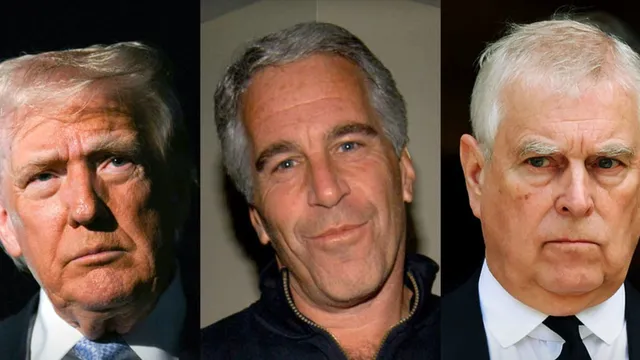
Andrew seeks new inappropriate friends as Epstein files reveal emails
Andrew seeks new inappropriate friends as Epstein files reveal emails
- Emails released by the DOJ include a request from Andrew Mountbatten-Windsor asking Ghislaine Maxwell for new acquaintances.
- The correspondence exposes Andrew’s familiarity with Maxwell and Epstein during the early 2000s.
- These revelations raise serious questions about his judgment and associations with known criminals.
Story
The documents released by the US Department of Justice provide a significant amount of information regarding Andrew Mountbatten-Windsor’s connections with Jeffrey Epstein and Ghislaine Maxwell. Specifically, an email from August 2001 reveals that Andrew, who was then at Balmoral Castle, contacted Maxwell, requesting introductions to 'new inappropriate friends.' The email illustrates his desire to socialize in a private and discreet manner, emphasizing the need for this additional company while he prepared for upcoming obligations in the fall. The tone of the correspondence raises questions about the appropriateness of his connections. The context surrounding these emails is complex, as they shed light on the nature of Andrew's relationship with Epstein and Maxwell, which has drawn public scrutiny due to Epstein’s criminal history. Andrew’s communication reflects a more personal side to their acquaintanceship, diverging from the public perception of mere association. This correspondence occurred during a time when Epstein was well-known for his influence and connections, suggesting that Andrew could have benefitted from associating with him in social circles that hold considerable sway. The documents also detail conversations about personal turmoil in Andrew's life following the loss of a long-time employee, indicating a more vulnerable side to his requests. In recent years, the monarchy has faced backlash due to Andrew's previous ties to Epstein, leading to his public distancing from royal duties and the stripping of his titles. This fallout has been compounded by allegations from Virginia Giuffre, who has accused Andrew of inappropriate behavior when she was a minor. Although Andrew has consistently denied these allegations, the release of these emails reopens conversations about his judgment and the extent of his relationships with individuals involved in criminal activity. Public reactions have ranged from disappointment in Andrew's conduct to calls for accountability from royal figures regarding their associations. Analysts and commentators have criticized the royal family for allowing Epstein and Maxwell access to privileged environments and questioned how such relationships could persist without more robust scrutiny. As the inquiry into Epstein's dealings continues, the implications for Andrew's legacy and the royal family remain significant, with ongoing discussions about ethics, privilege, and accountability within the institution.
Context
The impact of the Epstein documents on the UK royal family has garnered significant attention and concern since the emergence of these documents in recent years. The allegations linked to Jeffrey Epstein, an infamous financier and convicted sex offender, have implications not only for individuals implicated in his actions but also for broader institutional reputations, including the British monarchy. These documents, which have surfaced through various legal proceedings and journalistic investigations, have raised questions about connections between Epstein and several prominent figures, including members of the royal family. Notably, the scrutiny has largely concentrated on Prince Andrew, Duke of York, who has faced allegations of involvement in Epstein's network, which has placed considerable strain on the royal institution's credibility and public standing. One significant fallout from the Epstein documents has been the public and media scrutiny of Prince Andrew's past associations. As allegations against him surfaced, including claims made by Virginia Giuffre that she was trafficked to him by Epstein, the royal family was forced to respond. Prince Andrew's attempts to defend himself, including a high-profile BBC interview, backfired and led to further reputational damage. As a result, he stepped back from royal duties, and his associations with the monarchy became a topic of national and international discussion. This has not only affected his personal standing but has also cast a long shadow over the institution of the royal family, leading to calls for accountability and transparency. The royal family's association with Prince Andrew has also caused a ripple effect on perceptions of the monarchy amidst an evolving political and social landscape in the UK. The Epstein scandal intersects with ongoing discussions about privilege, power, and accountability among elite figures. As the UK grapples with modern scandals and demands for reform, the royal family finds itself at the center of public debates about the relevance and appropriateness of the monarchy itself in a contemporary democratic society. This crucial dialogue underscores the challenge faced by the institution in maintaining its image while dealing with the repercussions of past members' alleged misdeeds. Looking ahead, the continued fallout from the Epstein documents suggests that the royal family must take proactive measures to manage its reputation and address issues of accountability. This includes heightened scrutiny and the need for clearer communication regarding its stance on matters related to personal conduct and associations. As the consequences of the Epstein documents unfold, they serve as a pivotal chapter in the royal family's narrative, prompting an evaluation of its relevance and positioning within modern Britain. The monarchy's ability to navigate these challenges while remaining institutionally intact will depend on addressing public concerns transparently and forthrightly.


