

UK secures contracts for record offshore wind projects amid rising prices
UK secures contracts for record offshore wind projects amid rising prices
- The UK government has awarded contracts for offshore wind projects to increase the country's clean electricity supply.
- The Berwick Bank project will include up to 307 turbines and power six million homes, aiming to contribute to renewable energy targets.
- Despite record offshore wind capacities, analysts warn the government may struggle to meet its clean power goals by 2030.
Story
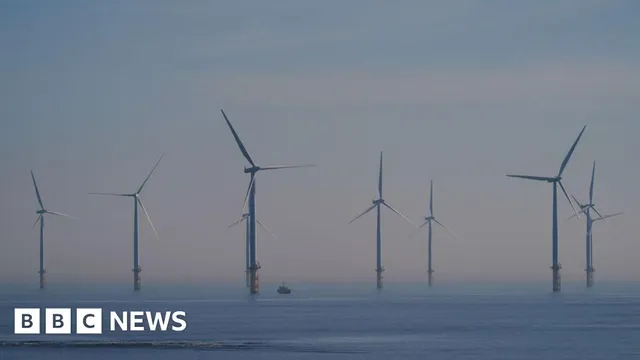
The UK has significantly increased its commitment to offshore wind projects, awarding contracts to build a record amount of offshore wind capacity. This development encompasses multiple sites across England, Scotland, and Wales, including what is poised to become the largest offshore wind farm globally, located off Scotland's coast in the North Sea. While the government argues that wind power will ultimately lower energy bills, critics, including the Conservative Party, claim that these climate initiatives are resulting in higher prices for consumers. Despite the optimistic outlook from officials, many analysts express concerns over whether the government can meet its 2030 clean power targets due to the high costs associated with these projects. Among the most significant projects is the Berwick Bank wind farm, which will feature up to 307 turbines and has the capacity to provide electricity to approximately six million homes. The 4.1 gigawatt (GW) venture is set in the outer Firth of Forth and constitutes one of 12 UK offshore wind projects that have received a Contract for Difference to maintain a minimum electricity price. This contract represents critical steps towards fulfilling the UK and Scottish governments' offshore wind ambitions, with expectations that successful deployment could greatly assist in stabilizing energy prices for consumers. However, concerns have been raised about the impact of such developments on local wildlife, particularly seabirds. Conservation groups continue to challenge the Berwick Bank project, indicating potential detrimental effects on the surrounding ecosystem. Although the Scottish government welcomed the contract award, it expressed disappointment in the quantity of contracts granted to Scottish projects, deeming it a missed opportunity and urging for more support in future rounds. Analysts further highlight the auction's weight in propelling the UK towards energy independence and achieving a greener grid by 2030. While energy officials maintain that the awarded contracts will eventually lead to reduced electricity bills and create thousands of jobs, they also acknowledge the rising costs associated with offshore wind production. In the most recent auction, traditional offshore wind projects saw an increase in fixed prices for electricity generation compared to previous years. This pricing trend comes amidst uncertainty about future electricity demand and gas prices, suggesting that while offshore wind is vital to the UK's energy future, its economics remain contentious and complicated. How these price fluctuations will impact households remains to be seen as the country transitions towards greener energy sources in the coming years.
Context
The impact of offshore wind farms on wildlife is a subject of growing interest and importance as the world moves towards renewable energy sources. Offshore wind farms are seen as a sustainable solution to meet energy demands while potentially contributing to wildlife conservation through reduced carbon emissions. However, the introduction of these structures in marine habitats poses both direct and indirect challenges to wildlife, particularly to marine mammals, fish, and seabirds. Understanding these impacts requires a comprehensive assessment of the ecological dynamics in areas designated for wind farm development, as well as ongoing monitoring to ensure that positive contributions to energy sustainability do not come at an unacceptably high cost to local ecosystems. Direct impacts such as habitat alteration and physical presence have been observed with the construction of offshore wind farms. The installation process can disturb marine environments, affecting local populations of fish and other marine life. Changes in water flow and sedimentation from the construction may also disrupt spawning and feeding habitats. Additionally, the turbines themselves present physical obstacles that can lead to collisions with flying birds or marine animals. It is crucial to develop strategies for mitigating these impacts, including optimizing turbine placement and incorporating wildlife-friendly designs to minimize risks of harm. Indirect impacts, however, can be equally significant. The presence of offshore wind farms can alter local food webs and predator-prey interactions, which can have cascading effects on marine biodiversity. Furthermore, the acoustic noise generated during both construction and operation can disrupt communication and navigation for various marine species, particularly mammals like dolphins and whales. To address these challenges, comprehensive environmental assessments and long-term ecological studies are vital to understand the full range of potential impacts, enabling the formulation of effective management and mitigation approaches that protect wildlife while promoting renewable energy initiatives. In conclusion, as the global focus on renewable energy sources intensifies, it is imperative that developers, regulators, and conservationists work collaboratively to understand and manage the impacts of offshore wind farms on wildlife. Emphasizing thorough impact assessments, innovative design solutions, and continuous monitoring can help balance the dual objectives of advancing clean energy technologies and protecting marine ecosystems. Future research should prioritize the development of best practices that can enhance the coexistence of offshore wind farms and wildlife, ensuring a sustainable future for both energy generation and biodiversity.


