

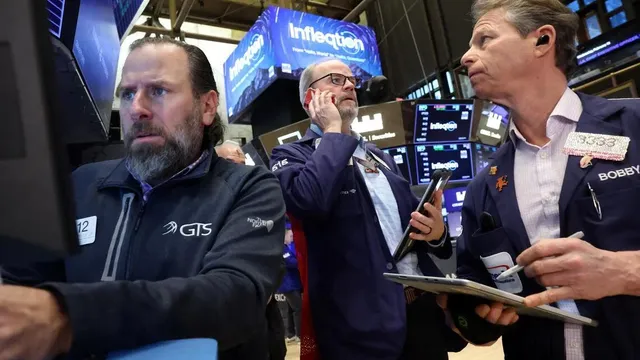
Wall Street tumbles amid tech turmoil and management changes
Wall Street tumbles amid tech turmoil and management changes
- Private equity firms experienced significant stock declines due to Blue Owl Capital's asset sale.
- Retail and technology stocks, including Walmart and Apple, faced downward pressure amid market uncertainties.
- Wall Street's decline reflects growing investor concerns about credit quality and the impact of AI on various industries.
Story
On February 19, 2026, financial markets in the United States faced a downturn, particularly affecting Wall Street. The decline was primarily influenced by private equity companies such as Blue Owl Capital, which announced the sale of $1.4 billion in assets and a freeze on redemptions of one of its funds. This action raised concerns about the credit quality of lenders and their exposure to software stocks, leading to significant losses for many private equity firms, including Apollo Global Management, Ares, KKR & Co, and Carlyle Group, whose stock prices fell between 1.9 and 5.2 percent. In addition to the issues affecting private equity firms, retail giants like Walmart and technology leaders such as Apple also experienced a dip in their stock values. Walmart's new CEO, John Furner, dampened investor optimism with a conservative fiscal 2027 forecast and a large $30 billion buyback plan, causing shares to drop by 1.4 percent. Meanwhile, AI-linked tech stocks continued to experience volatility, driven by apprehension about inflated valuations and uncertainties regarding the actual impact of hefty investments in artificial intelligence on revenue generation. However, not all sectors witnessed losses. The industrial sector saw notable gains, as evidenced by Deere & Co, which soared by 11.6 percent following an upward adjustment of its annual profit forecast and strong first-quarter results. Conversely, the advertising industry produced mixed outcomes; while Omnicom's stock surged by 15 percent following better-than-expected fourth-quarter revenue, Carvana, an online used-car retailer, reported disappointing fourth-quarter profits and saw its shares tumble by almost 8 percent. This highlights the divergent performance trends of various companies within the market, with technology being a particularly sensitive area due to ongoing AI advancements. Moreover, the S&P 500 and the Nasdaq both recorded a higher number of new lows than new highs, further emphasizing the market's struggles on this day. As volume on U.S. exchanges decreased, investors remained focused on macroeconomic indicators, particularly the minutes from the most recent Federal Reserve policy meeting. These minutes suggested a division among policymakers over future monetary policies, creating uncertainty about the direction of interest rates. Investors were also evaluating jobless claims data, which indicated a stabilizing labor market and were anticipated to analyze the upcoming Personal Consumption Expenditures report due on February 20 for insight into inflation trends that could influence Fed decisions.


