

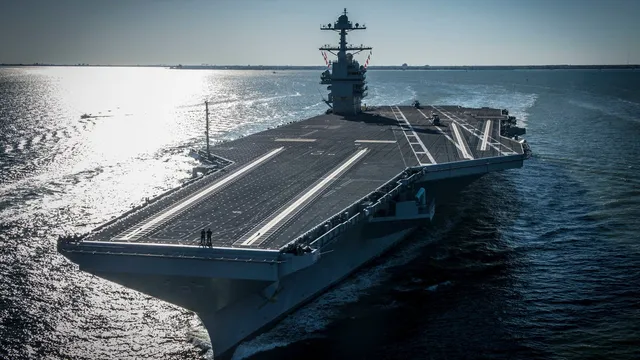
USS Gerald R. Ford heads to Middle East amid rising tensions with Iran
USS Gerald R. Ford heads to Middle East amid rising tensions with Iran
- The USS Gerald R. Ford is being ordered to the Middle East as tensions rise with Iran.
- This relocation follows the arrival of the USS Abraham Lincoln and three guided-missile destroyers more than two weeks ago.
- The significant military buildup reflects the U.S. administration's efforts to compel Iran to engage in negotiations over its nuclear program.
Story
In recent developments regarding U.S. military presence overseas, the USS Gerald R. Ford, known as the world's largest aircraft carrier, has been redirected to the Middle East. This decision comes as President Donald Trump evaluates potential military actions against Iran related to its nuclear program. The USS Ford’s deployment follows the earlier arrival of another aircraft carrier, the USS Abraham Lincoln, and three guided-missile destroyers in the region, marking a significant buildup of U.S. naval forces. The USS Gerald R. Ford was initially dispatched to the Caribbean Sea last October and is set to have its crew deployed for about eight months. This deployment is considered lengthy and atypical, especially given the context of the U.S. military strategy, which has recently placed greater emphasis on the Western Hemisphere. Trump had indicated his contemplation of sending a second aircraft carrier strike group to the Middle East, which resulted in the current decision to redirect the USS Ford. The White House has not commented on the details of this military maneuver, highlighting the sensitive nature of U.S. military operations and the ongoing geopolitical tensions surrounding Iran. This militaristic stance reflects the U.S. administration's increasing pressure on Iran to negotiate over its nuclear program and can be seen as part of a larger strategy in addressing regional security challenges. Evidently, the deployment symbolizes the U.S. commitment to maintaining a strong military presence in the Middle East amidst ongoing concerns regarding Iran's nuclear aspirations. Moving forward, it remains unclear how long the USS Gerald R. Ford will remain in the region, leaving uncertainties for its crew who have already extended their time away from home for significant military operations over the past months. Such circumstances compound existing tensions between the U.S. and Iran, raising questions regarding future diplomatic engagements and military operations in the region.


