

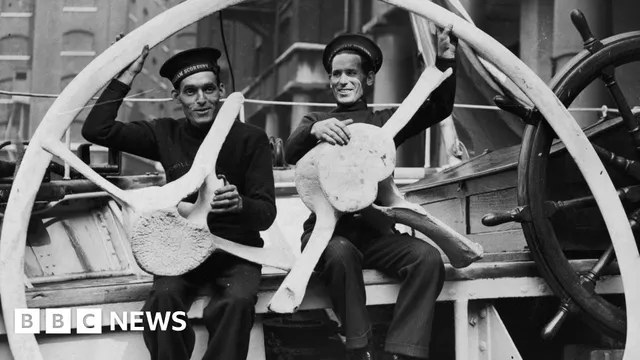
William Scoresby revolutionized our understanding of ocean currents
William Scoresby revolutionized our understanding of ocean currents
- The Royal Research Ship William Scoresby set sail from Hull, England, in June 1926 for research on whale stocks and ocean currents.
- During its voyages, the ship gathered crucial data on the Humboldt and El Nino currents, enhancing understanding of their global impacts.
- The legacy of the Scoresby continues to inform current studies on climate change and oceanography.
Story
In June 1926, the Royal Research Ship William Scoresby departed from Humber Dock in Hull, England, embarking on a mission to explore the southern oceans. This ship was specifically designed for research on whale stocks, particularly around the Falkland Islands, and was built at the Cook, Welton and Gemmell shipyard. The Scoresby was notable for its pioneering work in marine biology and oceanography, laying the groundwork for future studies of ocean currents. During its voyages, particularly in the 1930s, the ship gathered crucial data on the Humboldt and El Nino currents, which significantly enhanced the scientific community's understanding of these phenomena and their global impacts. The ship's contributions were not limited to scientific research; it also played a role during World War II. The Scoresby was repurposed for Operation Tabarin, a covert operation aimed at asserting British claims over various islands in the South Atlantic, particularly in response to Argentinian interests. This operation was characterized by its secretive nature, reflecting the geopolitical tensions of the time. After the war, the Scoresby was laid up in the 1950s and eventually scrapped, but its legacy in oceanographic research remains significant. The work conducted by the Scoresby has had lasting implications for our understanding of climate patterns, particularly in relation to El Nino, a natural weather phenomenon that has been linked to extreme weather events globally. As scientists today grapple with the implications of climate change, the foundational research conducted by the Scoresby continues to inform current studies and forecasts regarding ocean currents and their effects on global weather patterns. The ship's voyages not only contributed to marine biology but also provided critical insights into the interconnectedness of oceanic and atmospheric systems. In recent years, the UN has warned of a new phase of El Nino, which could be one of the strongest on record, highlighting the ongoing relevance of the research initiated by the Scoresby. As we face the challenges posed by climate change, understanding the historical context of oceanographic research becomes increasingly important. The legacy of the William Scoresby serves as a reminder of the importance of scientific exploration and its role in addressing contemporary environmental issues.


