

Google improves Gemini AI with significant problem-solving enhancements
Google improves Gemini AI with significant problem-solving enhancements
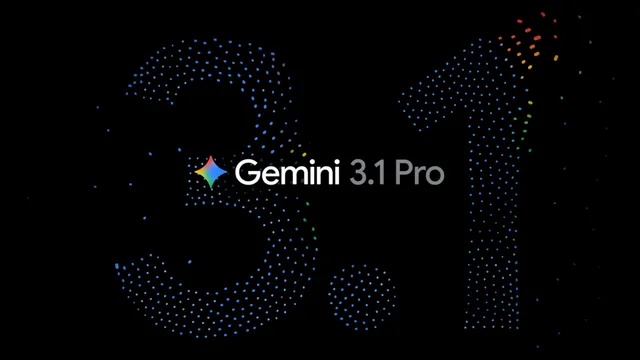
- Google released Gemini 3.1 Pro on February 19, 2026, boasting enhancements in problem-solving capabilities.
- The new model significantly improved its score on benchmarks compared to its predecessor and competitors.
- Despite improvements, Gemini 3.1 Pro does not lead the AI Arena leaderboard, indicating the competitive landscape of AI technology.
Story
On February 19, 2026, Google commenced the rollout of its new AI model, Gemini 3.1 Pro. This latest iteration of Google's flagship AI promises enhanced problem-solving and reasoning capabilities specifically designed to tackle complex challenges. Google had previously indicated improvements to its Deep Think tool, attributing these advancements to the newly introduced Gemini 3.1 Pro, which has been made accessible in preview for developers and consumers. Demonstrating notable advancements, Gemini 3.1 Pro significantly improved its performance on the ARC-AGI-2 benchmark, which tests novel logic problems unsuitable for direct training into AI models. While its predecessor, Gemini 3, achieved a score of only 31.1 percent, the new version more than doubled this result, reaching an impressive 77.1 percent. However, despite these improvements, competing models, such as Claude Opus 4.6, still outperform it in certain areas like text generation. To highlight the capabilities of Gemini 3.1 Pro, Google showcased its proficiency in generating graphics and simulations, claiming that it produces more elegant outputs. Typically, Google takes the opportunity to boast about being at the top of the AI Arena leaderboard upon releasing new models, but this time around it acknowledges that it has fallen short of that mark. The comparison with competing models illustrates that Google still has work to do to achieve a leading position in the rapidly evolving AI landscape. Gemini 3.1 Pro is available on both the Gemini app and NotebookLM for regular users, while developers can utilize it through the Antigravity IDE and AI Studio. Despite the upgrades, Google has kept the pricing structure unchanged for developers, maintaining $2 for input and $12 for output per 1 million tokens and retaining the context window limits. This suggests that Google is strategically prioritizing enhanced performance and user experience while keeping its service accessible financially.


