

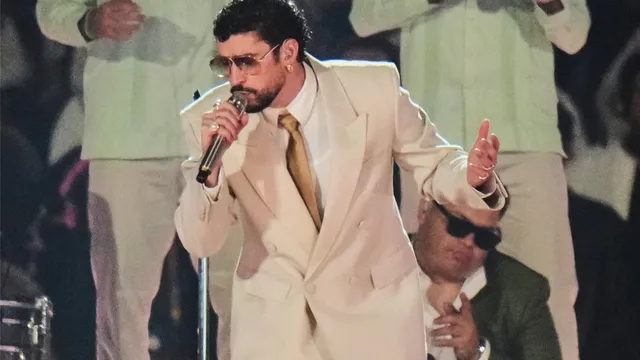
Bad Bunny makes history by headlining Super Bowl halftime show
Bad Bunny makes history by headlining Super Bowl halftime show
- The Super Bowl 2026 was held at Levi's Stadium, featuring Bad Bunny as the headline performer.
- Bad Bunny is the first Spanish-language artist to solo headline the Super Bowl halftime show, promoting Latino culture.
- His performance is strategically important for the NFL to connect with the growing Latino audience.
Story
On February 8, 2026, the Super Bowl took place at Levi's Stadium in Santa Clara, California, featuring a highly anticipated halftime show headlined by Puerto Rican artist Bad Bunny. This performance marked a significant milestone in music history, being the first time a Spanish-language artist headlined the Super Bowl halftime show solely on their own. Bad Bunny has garnered fame as a globally recognized artist with multiple Grammy Awards, including the historic Album of the Year win for his album 'Debí Tirar Más Fotos' just a week prior to the Super Bowl, making this performance a celebratory representation of Latino culture. In addition to his solo performance, there was significant speculation and anticipation surrounding potential surprise guest appearances. Artists such as Cardi B, Daddy Yankee, and Rosalía were rumored to join Bad Bunny on stage. The inclusion of these A-list collaborators reflects Bad Bunny's networking within the music industry and his rising status within pop culture. This performance aimed to bring together diverse audiences, promoting unity, especially in light of current political divides. Despite facing backlash from some conservative groups due to his outspoken views on immigration policies and social justice, Bad Bunny's selection to headline was a strategic move by the NFL to reach the growing Latino demographic in the U.S., which is critical to the league's future growth. His ability to connect with audiences and represent his heritage was seen as an asset that could resonate with millions tuning in during one of pop culture's most iconic events. Overall, Bad Bunny's Super Bowl halftime show not only entertained but also served as a cultural statement, showcasing the importance of representation in mainstream media. As a result, the event has been lauded for its potential to break records regarding viewership and its influence on the music industry. Bad Bunny's pull as a global sensation, especially following his record-breaking tour statistics and streaming numbers, reinforces the NFL's effort to embrace and celebrate diversity within their programming.
Context
The history of Spanish-language artists in American music events is a rich and complex narrative that reflects the broader cultural exchanges between the United States and Latin America over the decades. Beginning in the early 20th century, Spanish-language music started to carve out its space within the American music scene. Artists such as Carlos Gardel, a prominent tango singer from Argentina, began to gain recognition, performing in venues that welcomed diverse music styles. The influence of genres such as mambo, cha-cha, and salsa emerged in the mid-20th century, particularly with the rise of artists like Tito Puente and Celia Cruz, heralding a new era where Spanish-speaking artists were not just guests at music events but started to receive their deserved spotlight in the American nightlife and concert circuits. The latter half of the 20th century saw a significant expansion of Spanish-language music within mainstream American culture. Festivals and music events began to integrate these artists more comprehensively. The establishment of specialized genres like Tejano music, brought forth by artists such as Selena and Los Tigres del Norte, marked a turning point as they gathering thousands of fans and became staples at major music festivals. The increasing popularity of these genres attracted considerable Hispanic audiences while also piquing the interest of the broader population. This period highlighted the profound influence and contributions of Spanish-language artists, who began to dominate the charts and push for greater representation in places like the Grammys and the American Music Awards. Entering the 21st century, a new wave of artists emerged, utilizing technology and social media to reach wider audiences. Artists like Shakira, Enrique Iglesias, and Daddy Yankee not only crossed over into the English-speaking markets but also set numerous records for bilingual hits on the charts. Events such as Coachella began to showcase these artists more prominently, symbolizing their significant acceptance and influence in pop music. The collaborations between Spanish and English artists further illustrated the blending of cultures, as hip-hop and reggaeton began to intermingle, producing tracks that dominated airwaves worldwide. The current landscape continues to evolve, with the rise of regional Mexican music and urban Latin genres gaining immense popularity. The success of artists like Bad Bunny and Karol G illustrates their substantial impact on American charts, underscoring the shifting dynamics within the music industry. Additionally, music awards shows have started to recognize and celebrate the contributions of Spanish-language artists more than ever before, reflecting a profound cultural evolution. As events and festivals increasingly prioritize inclusivity and diversity, the narrative of Spanish-language artists in American music is poised to continue flourishing, shaping the identities and experiences of fans across generations.


