

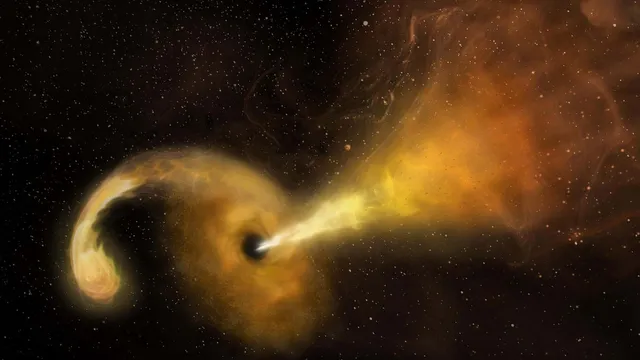
Volunteers needed to help find stars torn apart by black holes
Volunteers needed to help find stars torn apart by black holes
- Astronomers are enlisting volunteers to identify stars being torn apart by black holes, particularly through tidal disruption events.
- The Legacy Survey of Space and Time (LSST), taking place over 10 years at the Vera C Rubin Observatory in Chile, will provide unprecedented astronomical data.
- The project seeks to engage non-experts with machine learning skills to analyze the vast datasets, potentially revolutionizing our understanding of black holes.
Story
In a groundbreaking initiative announced in December 2025, astronomers from Queen's University Belfast and the Leiden Observatory in the Netherlands are calling for volunteers to assist in identifying stars being ripped apart by black holes. This effort is part of the Legacy Survey of Space and Time (LSST), a major project at the Vera C Rubin Observatory located in Chile, which will capture data from the night sky over the next ten years. The endeavor aims to generate an unprecedented amount of astronomical data, with estimates suggesting around 10 million alerts each night, making manual analysis impractical. Dr. Matt Nicholl of Queen's University emphasized how the LSST data is expected to transform the field of astronomy. It will allow scientists to potentially detect thousands of black holes consuming stars, yet due to the sheer volume and complexity of the data, identifying relevant events will be akin to searching for a needle in a haystack. To tackle this challenge, the team has developed simulations of the data that volunteers can use along with AI and machine learning techniques. The project seeks 'tech-savvy armchair astronomers' for their insights and skills, highlighting that prior expertise in black holes is not necessary, just a background in machine learning. This initiative particularly focuses on tidal disruption events where stars come too close to supermassive black holes and are torn apart by gravitational forces. Dylan Magill, a PhD student involved in creating simulations for the project, noted that the expected influx of data provides a unique opportunity to discover more tidal disruption events. Dr. Sjoert van Velzen of Leiden Observatory, a co-founder of this challenge, remarked on the scientific importance of these events which can yield crucial insights into the behavior of black holes that are otherwise difficult to observe. The project invites public participation, amplifying collaborative efforts in astronomical research as it aims to unlock numerous mysteries of the universe.


