

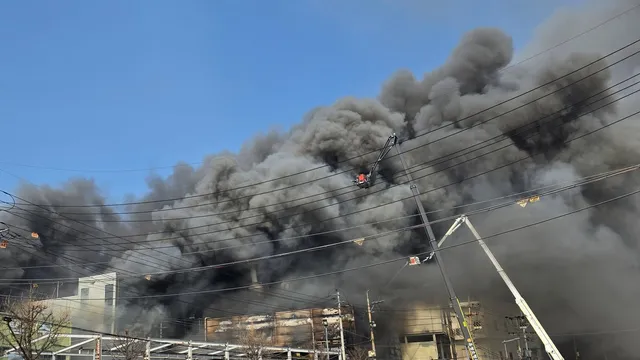
Fifty injured in devastating fire at South Korean factory
Fifty injured in devastating fire at South Korean factory
- A fire erupted at an auto parts factory in Daejeon, South Korea, injuring at least 50 people.
- The fire was reported at 1:17 p.m., prompting a significant emergency response with over 200 firefighters.
- Authorities are investigating the cause of the fire while concerned officials warn that casualties may rise.
Story
In South Korea, a serious fire broke out at an auto parts factory located in the central city of Daejeon on Friday, March 20, 2026. Reports indicate that at least 50 individuals sustained injuries during the incident, prompting a large-scale emergency response. The National Fire Agency provided information stating that 35 of these injured persons were reported to have sustained serious injuries, although it was initially unclear if any were in critical condition. Eyewitness accounts and video footage revealed thick gray smoke engulfing the factory, indicating a significant blaze that required immediate attention from emergency services. The fire was initially reported around 1:17 p.m., causing alarm among local officials and residents. At the time of the reporting, the precise number of workers still inside the factory was uncertain, raising concerns that the casualty count could escalate as rescue operations progressed. More than 200 firefighters along with 70 firefighting vehicles were dispatched to combat the flames, highlighting the severity of the situation and the urgent need for prompt action. As law enforcement and rescue workers continued efforts to gain control over the fire, South Korean Prime Minister Kim Min-seok urged the complete mobilization of personnel and resources to both contain the fire effectively and to execute rescue operations for any individuals potentially trapped inside the factory. This event marks a significant emergency for Daejeon and is indicative of the ongoing risks associated with manufacturing facilities, particularly those involved in high-traffic production activities. Given this incident, the local community expressed concern over safety protocols in place within similar establishments. Investigations into the cause of the fire were initiated, but officials had yet to disclose any findings related to potential causes of the fire. The goal of rescue efforts remained paramount as officials continued to prioritize the safety and wellbeing of their citizens amidst this tragic event, with an emphasis on recovery and support for the injured individuals involved.
Context
The safety of auto factories in South Korea is an increasingly critical concern given the rising number of incidents and the nature of the automotive manufacturing processes. As the South Korean automotive industry continues to expand and innovate, there are growing responsibilities for manufacturers to adhere to stringent fire safety regulations. These regulations are designed to protect not only the physical assets of the factories but also the health and safety of the workers involved in the automotive production process. Recent fires in various factories have heightened awareness and prompted calls for reviews and enforcement of existing safety regulations. The need for improved fire prevention strategies, updated safety training for employees, and regular inspections are paramount in preventing future incidents. Fire safety regulations in South Korea are overseen by various governmental bodies, which are mandated to establish and enforce comprehensive fire safety measures. These measures include the installation of advanced fire detection systems, the availability of suppression systems such as sprinklers, and clear evacuation protocols for employees in case of an emergency. Compliance with these regulations is crucial for manufacturers who wish to maintain operational licenses and protect their workers. It is essential that all employees are trained in safety procedures and that regular drills are conducted to ensure preparedness in the event of a fire. This emphasizes the importance of a culture of safety that benefits everyone within the organization. The South Korean government has taken proactive steps to enhance fire safety in the automotive sector, including the implementation of stricter building codes and safety standards that must be followed by manufacturers. These codes often require factories to conduct risk assessments to identify potential fire hazards and develop specific strategies to mitigate these risks. Moreover, it is important for companies to invest in state-of-the-art technology that can aid in fire prevention, such as fire-resistant materials and automated detection systems. This kind of forward-thinking approach not only meets regulatory requirements but also promotes a safe working environment that can lead to improved productivity and morale among workers. As the South Korean automotive industry evolves, the integration of safety innovations within factories will remain a key focus. Collaboration between the government, industry leaders, and safety experts will be essential to ensuring that fire safety regulations stay current with technological advancements and emerging risks. Additionally, ongoing education and engagement with employees about fire safety risks and protocols will foster a proactive safety culture. By placing a strong emphasis on fire safety, South Korean automotive manufacturers can not only protect their assets but also enhance their reputation as responsible and conscientious employers.


