

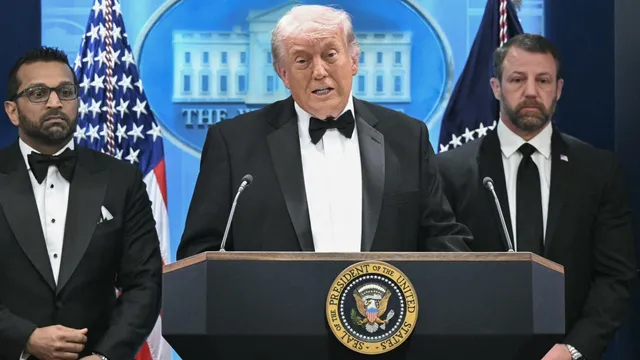
Gunman arrested after attempting to shoot Trump officials at correspondents' dinner
Gunman arrested after attempting to shoot Trump officials at correspondents' dinner
- Gunfire was reported during the White House Correspondents' Dinner, leading to a chaotic evacuation.
- Cole Tomas Allen, the suspect, was arrested and purportedly aimed to shoot Trump's administration officials.
- The incident highlights ongoing security concerns for political events in the United States.
Story
On April 25, 2026, at the Washington Hilton, a major security incident unfolded when shots were fired during the White House Correspondents' Dinner. The event, which was attended by President Donald Trump and First Lady Melania Trump, quickly escalated into chaos as gunfire rang out, resulting in both the President and First Lady being evacuated from the venue by Secret Service agents. Witnesses described attendees ducking under tables while security officials responded to the commotion, which continued until law enforcement took control. Shortly after the shots were fired, six guests were also escorted from the ballroom by security teams. Initial reports indicated that the alleged gunman, identified as Cole Tomas Allen, was a guest at the hotel and was armed with multiple weapons, including a shotgun and a handgun. Following his arrest, it was revealed by law enforcement that Allen had expressed intentions to shoot Trump administration officials. The gunfire resulted in a brief lockdown of the event, with the Secret Service swiftly convening to protect the President, creating a body barrier while maintaining control over the situation. Fortunately, no injuries were reported as a result of the incident. This event marks a significant lapse in security measures during an occasion that has historically been a platform for political dialogue and satire. The presence of a lone gunman at such a high-profile gathering raised serious questions about the effectiveness of the hotel’s security protocols. It became apparent that the man's intentions were serious, as he engaged in an exchange of gunfire with security officials before being apprehended. Former officials and security experts voiced their concerns, suggesting that the security arrangements in place were inadequate, thus sparking a debate about the protection provided for public figures in such situations. In the wake of this incident, President Trump addressed the nation, describing the event as shocking but reinforcing his commitment to ensuring the safety of all participants in public gatherings. As investigations continue, the spotlight remains on the balance between security measures and the rights of individuals attending such events. This incident has not only highlighted the need for improved security protocols but has also reignited discussions about the increasing levels of political violence within the United States. With tensions rising and threats against officials becoming more common, there is a pressing need for a reassessment of how public events, especially those involving key government figures, are secured and managed.
Context
Political violence in the United States has become a significantly growing concern by 2026, marked by a series of incidents that have disrupted the social fabric and underscored a deepening polarization within the nation. Over recent years, various forms of political violence have emerged, including protests that have turned violent, attacks on individuals based on their political beliefs, and significant threats against public officials. This troubling trend reflects not only extreme ideological divisions but also a widespread sense of disillusionment among the populace regarding democratic processes and institutions. The rise of social media has also played a role, amplifying divisive rhetoric and allowing extremist ideologies to gain traction, which in turn has contributed to increasing hostility and violence in political discourse. The catalysts for this upsurge in political violence can be linked to several interrelated factors. Firstly, the economic disparities have intensified feelings of disenfranchisement among various groups, which often manifest in political extremism. The impact of the COVID-19 pandemic further exacerbated these issues by increasing financial stress, social isolation, and politicizing health measures, thereby creating a fertile ground for radicalization. Additionally, the normalization of confrontational rhetoric by certain political figures has emboldened individuals to resort to violence as a means of expressing dissent or enacting ideological agendas. The intertwining of societal grievances with heightened political tensions has made the environment more combustible, raising concerns about the potential for future violence. The government and various civic organizations have recognized the urgent need to address this rising tide of political violence. Strategies implemented to mitigate these threats include enhancing community engagement programs that work towards reconciliation and understanding among disparate groups. Law enforcement has also been tasked with developing more robust measures for monitoring and responding to extremist activities while prioritizing civil liberties and free speech. Furthermore, educational initiatives aimed at promoting media literacy among citizens have gained traction, equipping individuals with the skills to critically analyze information and discourage the spread of divisive narratives. Nonetheless, the success of these interventions will largely depend on fostering a culture of dialogue and respect across the political spectrum. In conclusion, political violence in the United States in 2026 represents a multifaceted challenge that cannot be overlooked. Addressing this phenomenon will require a concerted effort from all sectors of society, including government, community leaders, and the general public. Combating the underlying causes of political violence necessitates a commitment to rebuilding trust in democratic institutions and promoting inclusivity, understanding, and constructive dialogue. Ongoing assessment of the effectiveness of implemented strategies will play a crucial role in shaping the nation's response to this profound issue, ensuring the protection of democratic values and the safety of all citizens.


