

Hamas consolidates power in Gaza as Iran war shifts focus
Hamas consolidates power in Gaza as Iran war shifts focus
- Hamas has been observed reasserting control in Gaza following the Iran war.
- The group's activities include police presence, market checks, and education initiatives.
- Analysts suggest that reduced pressure allows Hamas to reinforce its governance in the region.
Story
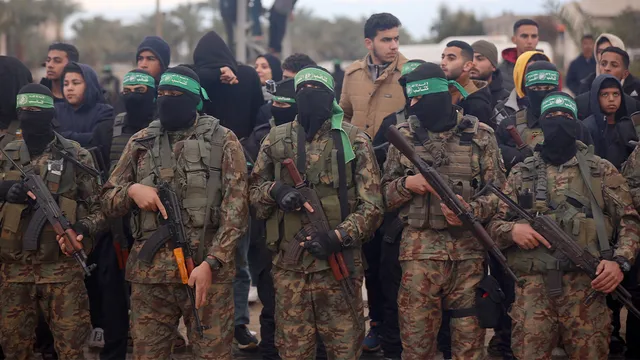
In recent days, as the Iran war has taken center stage in regional geopolitical discourse, Hamas has been observed reasserting its control over Gaza. Videos and photos shared on social media showcase this resurgence, including evidence of new Hamas recruits, police deployments throughout the area, and even public parades in central Gaza. Israeli analyst Michael Milshtein and Gazan political commentator Mukhaimer Abu Saada noted that, unlike previous situations, Hamas currently faces less pressure. With attention diverted from Gaza, the group is reportedly enhancing its public image and operational systems. During Ramadan, their personnel were actively monitoring markets and mosques and commencing efforts to build an educational framework within the enclave. Milshtein emphasized that Hamas's renewed dominance is notable, with signs indicating improvements in the group's taxation systems and public safety measures. The analysts reported that discussions about Gaza's future political landscape, including international disarmament talks, were effectively stalled. This change in dynamic is attributed in part to the ongoing ramifications of the Iran war, which have lessened external pressures on Hamas and altered the narrative surrounding Gaza. Additionally, both analysts posited that any potential international stabilization force being discussed may not be viewed as a threat by Hamas. Abu Saada mentioned that the group may actually welcome the presence of such forces, interpreting their deployment as a way to restrain Israeli military actions rather than to enforce disarmament. Milshtein further elaborated on this perspective, suggesting that Hamas perceives international personnel akin to the UN peacekeeping forces in Lebanon, primarily there to protect them from Israel rather than to dismantle or diminish their military capabilities. The future of Gaza is now heavily dependent on the outcome of the Iran conflict. Abu Saada noted that the moral support for Hamas may increase should the Iranian regime remain intact after the war. Conclusively, as the regional debate continues to swirl around Iran, attention towards Gaza is inclined to remain subdued, allowing Hamas a window of opportunity to solidify its governance and military foothold in the area.


