

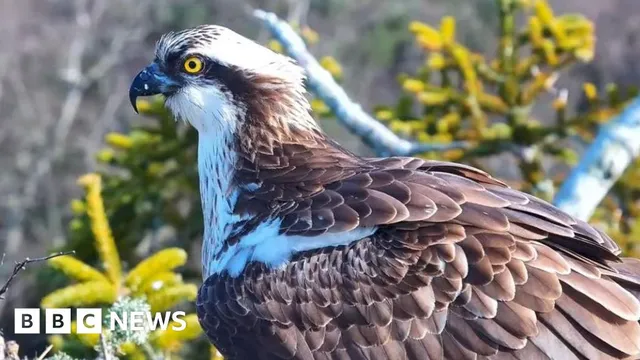
Ospreys successfully nest at Careys Secret Garden after 180 years
Ospreys successfully nest at Careys Secret Garden after 180 years
- The first pair of ospreys have nested in southern England in 180 years.
- Conservationists await the return of the ospreys in late March after their migration.
- The reintroduction program has seen success, enhancing the presence of ospreys in the region.
Story
In southern England, the ongoing reintroduction of ospreys has sparked excitement among conservationists. The male osprey 022 and female CJ7 have successfully nested at Careys Secret Garden near Wareham, Dorset, since 2022. These birds are significant as they represent the first pair to breed on the south coast of England in 180 years, indicating a positive trend in the return of this majestic species. As spring approaches, these ospreys are expected to return from their winter migration in western Africa around late March. The reintroduction efforts, led by the charity Birds of Poole Harbour, began in 2017 when osprey chicks were brought from Scotland and released in Dorset. The conservation organization is monitoring the nesting pairs closely, including the potential for a young male osprey, hatched in 2023, to establish a new breeding pair. However, conservationists caution that the return rate is only about 30% due to the dangers of migration. Factors contributing to low return rates may include predation and difficult weather conditions during migration, which can leave young ospreys vulnerable. As conservationists express hope for the pair’s continued nesting success, their efforts highlight the love for and loyalty of ospreys to their nest sites rather than to individual partners. CJ7 and 022, having hatched four chicks each in 2024 and 2025 respectively, demonstrate a notable example of successful breeding in the area. The organization emphasizes that impactful changes come with long-term dedication to species preservation. The establishment of a nestcam and viewing platform at Careys Secret Garden underlines the commitment to observing these remarkable birds while ensuring their nesting sites remain undisturbed. By keeping some nest sites secret, conservationists aim to minimize human interference during critical breeding periods. The reintroduction of ospreys to southern England not only contributes to the recovery of the species but also serves as an important reminder of successful conservation measures.


