

Chinese automakers lead the global electric vehicle revolution
Chinese automakers lead the global electric vehicle revolution
- US, European, and Japanese car manufacturers are struggling to keep up with advancements from Chinese electric vehicle companies.
- China's government support and lower production costs have significantly improved its position in the global automotive market.
- As vehicle production shifts toward China, there are potential implications for job losses and economic challenges in regions dependent on traditional automotive manufacturing.
Story
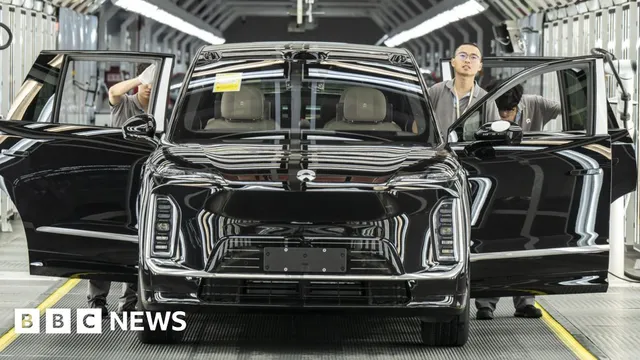
In May 2026, the global automotive industry is witnessing a significant shift as car manufacturers from the United States, Europe, and Japan find themselves increasingly challenged by their Chinese counterparts. The BBC's visit to electric vehicle factories in Beijing and Hefei highlighted the advanced levels of automation and rapid software development that characterize China's factories. As production of electric vehicles accelerates, this has left formerly dominant foreign brands struggling to maintain their market share. One notable observation was that China has become a leader in producing electric vehicles at a cost that is noticeably lower than what is seen in more developed economies. The International Energy Agency reports that the cost to manufacture a small electric SUV in China is at least 30% cheaper, primarily due to lower battery production costs and sophisticated supply chains that have been enhanced by significant state support over the years. This growing cost advantage has contributed to the rise of Chinese manufacturers in the EV sector. The trend towards increased automation and faster production speeds is exemplified by Xiaomi's electric vehicle factory, which reportedly produces a car every 76 seconds. Similarly, BYD has made advancements in battery technology, offering ultra-fast charging systems that can provide 400 kilometers of driving range in just five minutes. These innovations are compelling foreign companies to adapt quickly in order to remain competitive in an industry that is merging robotics with automotive manufacturing. As the manufacturing landscape surrounding electric vehicles evolves, foreign carmakers are increasingly relying on China for global market supply. The recent decline in earnings for companies like General Motors indicates a stark change; once heavily dependent on profits from the Chinese market, their sales dropped by more than 21% in the first quarter of 2026. Additionally, high tariffs on Chinese vehicles in markets like the United States have effectively restricted them from fully entering that space. Experts express concern that this shift toward production and technology development in China could detrimentally affect manufacturing hubs in Southeast Asia and Europe, ultimately impacting jobs and local economies.


