

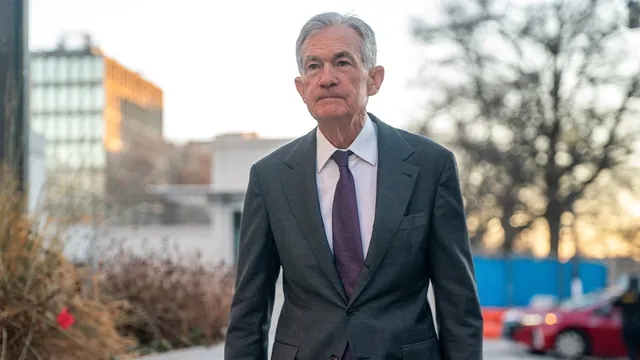
Senator urges Powell to resign amid DOJ investigation
Senator urges Powell to resign amid DOJ investigation
- A criminal investigation was launched by the Justice Department focusing on Jerome Powell's congressional testimony regarding renovations to the Federal Reserve headquarters.
- Senator Kevin Cramer suggested that Powell should resign to potentially halt the investigation into his actions.
- The ongoing scrutiny raises questions about the independence of the Federal Reserve and its ability to function without political interference.
Story
In recent months, the Justice Department launched an extensive criminal investigation targeting Jerome Powell, the Chair of the Federal Reserve. This investigation focuses on Powell's testimony to Congress regarding a costly renovation project of the Federal Reserve's Washington headquarters, which has been criticized as excessive, particularly in light of his past commitments to lower interest rates. Senator Kevin Cramer suggested Powell might consider resigning to possibly terminate the Department of Justice's inquiry. The investigation gained significant media attention, with Powell asserting that the situation is politically driven and threatens to disrupt the economy. Senate reaction was mixed; several Republican senators voiced skepticism about any wrongdoing on Powell's part. Coming from the Trump administration, Powell’s initial selection was based on perceived competence in fostering stability through consensus building. However, the current scrutiny has resulted in increased tensions between the White House and the Federal Reserve. As the understanding of this complex relationship develops, it raises critical questions about the future leadership and independence of the Federal Reserve, especially since Powell’s term as chair concludes on May 15, 2026. Despite demands for lower interest rates amid ongoing economic recovery efforts, central bank officials have cautioned against aggressive policy changes, indicating that lowering rates too dramatically could stoke inflation. As discussions unfold, Trump has continued to call for even lower rates, highlighting a balancing act between political interest and economic stability. Amid these pressures, Powell faces uncertainty, with calls for his leadership while navigating a highly charged political landscape. The renovation project of the Federal Reserve buildings, costing an estimated $2.5 billion, is seen as a crucial undertaking to modernize outdated structures. However, the controversy surrounding it underscores broader concerns regarding government spending and accountability. The ongoing investigation into Powell serves not only as a test of his leadership but also challenges the Fed's enduring reputation for independence in a politically fraught environment. As the scrutiny intensifies, it is essential to consider how these unfolding events will impact the Federal Reserve's autonomy and its ability to effectively manage the economy moving forward.
Context
The leadership of the Federal Reserve plays a pivotal role in shaping the economy of the United States through its monetary policy decisions, which influence inflation, employment, and economic growth. The Federal Reserve, often referred to as the Fed, is tasked with maintaining price stability and maximizing employment, objectives that can sometimes be at odds. The effectiveness of the Fed in achieving these goals is largely dependent on the vision and strategy of its leadership. Different Federal Reserve Chairs have historically adopted various approaches—some favoring aggressive actions to stimulate the economy, while others may prioritize controlling inflation over immediate economic growth. Consequently, the leadership style and decisions of the Federal Reserve greatly impact not only the U.S. economy but also have ripple effects globally, as the dollar serves as the world's primary reserve currency. One of the most significant ways in which Federal Reserve leadership influences the economy is through the setting of interest rates. For instance, during times of economic downturn, a more accommodative monetary policy led by the Fed can involve lowering interest rates to encourage borrowing and investment. Conversely, if inflation is deemed too high, the Fed may raise interest rates, which can slow economic activity but help stabilize prices in the long run. The transparency and communication from the Federal Reserve leadership regarding its decision-making process also set market expectations and influence consumer and business confidence. The timing, rationale, and perceived effectiveness of these policies can therefore lead to significant fluctuations in market behavior and economic performance. Moreover, the leadership dynamics within the Federal Reserve have evolved, particularly in recent years. As the economy faces challenges such as globalization, technological changes, and varying fiscal policies, there is a growing debate on the Fed's role and the broader implications of its leadership. The Chair must navigate complex environments where expectations are high, and missteps can lead to substantial economic consequences. Leadership stability and continuity are thus vital in the Fed's mission. Promotions from within the ranks or the selection of external candidates can indicate shifts in policy orientation, which parties with vested interests closely watch. Changes at the leadership level may stir debates about the Fed's autonomy and its relationship with the executive branch, potentially affecting how monetary policies are implemented in response to changing economic conditions. In summation, the impact of Federal Reserve leadership on the economy cannot be understated. Decision-making influenced by the Fed's leadership directly shapes the economic landscape of the United States. The approaches taken by different leaders in response to economic challenges—whether it be through interest rates, regulatory policy, or communication strategies—prove crucial in steering the economy towards stability and growth. As the global economy continues to evolve, the leadership and actions of the Federal Reserve will remain a critical factor in determining economic outcomes both domestically and internationally.


