

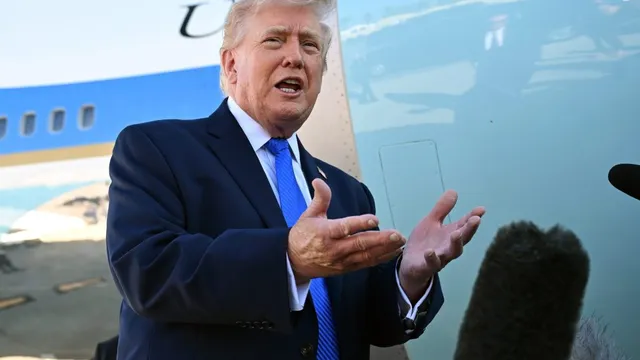
Donald Trump considers seizing Iran's key oil terminal
Donald Trump considers seizing Iran's key oil terminal
- President Donald Trump has suggested using military force to take control of Kharg Island, Iran's primary oil export terminal.
- The U.S. could encounter significant operational challenges and resistance from Iranian forces in any attempt to seize the island.
- The discussions around military action underscore the sensitive nature of U.S.-Iran relations amidst ongoing regional tensions.
Story
In recent developments in Iran, President Donald Trump has openly discussed the possibility of deploying U.S. troops to seize control of Kharg Island, pivotal for Iran's oil exports. This strategy reflects ongoing tensions amid conflicts in the Middle East, particularly as fighting around the Strait of Hormuz continues to disrupt global energy markets. The island, known for holding approximately 90% of Iran's oil exports, could become a significant target in U.S. military operations. Trump's recent statements targeting Kharg Island signal a potential escalation in U.S.-Iran relations. Amid these discussions, Trump also reposted an interview clip from 1987 where he suggested that the U.S. should capture Iranian oil installations in response to threats. This resurfacing indicates that Trump's view on Iran's oil infrastructure remains influential in his decision-making process regarding military strategy. Current Republican sentiments reflect concerns about involving ground troops in Iran and the potential for escalating military operations. Military experts are wary of the risks involved in a ground invasion of Kharg Island. The operational challenges include navigating through the strategically critical Strait of Hormuz, which is controlled by Iranian forces. Any military effort to secure the oil terminal would likely be met with fierce resistance, reminiscent of past military engagements where occupying forces faced continual hostility. Should U.S. troops actually invade, maintaining a foothold on the island amidst Iranian counterattacks would pose significant challenges. Ongoing discussions about potential military involvement indicate a complex geopolitical landscape where U.S. actions could have extensive implications not only for Iranian-U.S. relations but also for the broader regional stability in the Middle East. Concerns about prolonging conflict and the international ramifications of seizing assets in Iran add layers to the ongoing diplomatic conversations as the U.S. weighs its options in this evolving situation.
Context
The historical context of US-Iran relations is marked by a series of significant events that have shaped their complex relationship. The origins of the tension can be traced back to the early 20th century when Iran, then known as Persia, sought to modernize its economy and society. The United States initially held a strong interest in Iran, primarily due to its oil reserves, and in 1953, the CIA orchestrated a coup that overthrew the democratically elected Prime Minister Mohammad Mossadegh, ensuring the return of the Shah, Mohammad Reza Pahlavi, to power. This intervention is often cited as a pivotal moment that fostered resentment towards the United States among many Iranians, laying the groundwork for future conflicts. The 1979 Islamic Revolution in Iran marked a turning point in US-Iran relations. The revolution resulted in the overthrow of the Shah and the establishment of the Islamic Republic under Ayatollah Khomeini. The seizure of the US embassy in Tehran and the subsequent hostage crisis, where 52 American diplomats and citizens were held for 444 days, further deepened the rift between the two nations. The United States responded with economic sanctions and diplomatic isolation, which would become a hallmark of US policy towards Iran for decades to follow. This period also saw Iran's increasing alignment with anti-US sentiments across the Middle East, particularly as it supported groups like Hezbollah and engaged in armed conflict with Iraq during the Iran-Iraq War. In the years that followed, US-Iran relations fluctuated between periods of heightened tension and brief moments of potential diplomacy. The early 2000s were marked by the US invasion of Iraq, which removed a regional adversary of Iran, leading to the latter's growing influence in the region. The United States accused Iran of pursuing nuclear weapons capabilities, resulting in a series of sanctions and international negotiations. The culmination of these negotiations was the Joint Comprehensive Plan of Action (JCPOA) in 2015, which aimed to limit Iran's nuclear program in exchange for relief from economic sanctions. This agreement, however, was contentious in the United States and faced opposition from various political groups, ultimately leading to its unraveling when the Trump administration withdrew from the deal in 2018. The aftermath of the US withdrawal from the JCPOA saw a further decline in relations, characterized by increased hostilities, including military confrontations and intensified sanctions. Iran's response included a gradual breach of the nuclear agreement's terms, prompting concerns over its nuclear ambitions. In recent years, the relationship has remained fraught, despite attempts at dialogue, including back-channel communications. As of 2026, US-Iran relations continue to be influenced by regional dynamics, domestic politics, and international pressures, making the historical context of their interactions a critical framework for understanding current events.


