
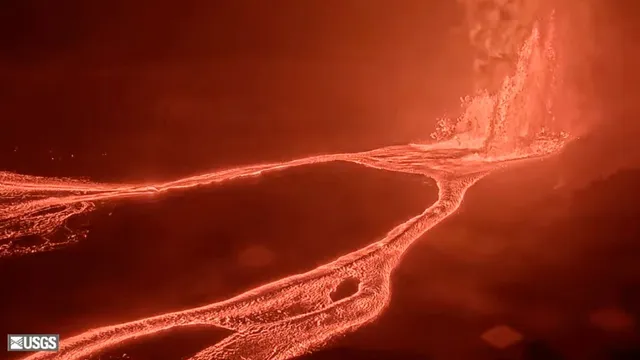
Hawaii's Kilauea volcano erupts spectacularly, stunning residents with lava fountains
- Periodic lava overflows have been occurring from the south vent of Kilauea since earlier this week.
- The United States Geological Survey has issued a code orange alert for the volcano due to ongoing activity.
- The eruption has garnered significant public attention due to its spectacular nature and cultural significance.
Story
In the United States, Hawaii's Kilauea volcano has continued its active eruption sequence, which began in December 2024. The latest eruption occurred recently, captivating many observers as it sent impressive lava fountains reaching heights of 400 feet. As part of this volcanic activity, periodic lava overflows began from the south vent, and the Hawaiian Volcano Observatory noted that since the beginning of the eruption series, the summit vents have experienced dozens of overflows, indicating the ongoing dynamic nature of the volcano. The United States Geological Survey (USGS) issued a code orange alert for Kilauea, suggesting that an eruption was likely to occur, with conditions being monitored closely. This alert reflects the potential for volcanic gas emissions, which can have far-reaching effects on air quality and health for those living downwind of the eruptions. With concerns about tephra and volcanic fragments, safety measures have been heightened, especially given that Highway 11 near Hawai'i Volcanoes National Park has experienced falls of volcanic materials during previous eruptions. The Halemaʻumaʻu crater has been the focal point of this activity, as it resides at the summit caldera of Kilauea. During this event, the erupted lava covered a significant portion of the crater's floor, and the environment around the caldera has been unstable, prompting closures of surrounding areas in the national park since 2007. Such eruptions can be visually spectacular, resembling nature's most extraordinary displays. Residents and visitors alike have expressed awe and fascination as they witness the natural phenomena. Volcanic eruptions like those at Kilauea not only hold a scientific and geological significance but are also deeply embedded in local culture. Native Hawaiian beliefs view the Halemaʻumaʻu crater as the sacred home of the volcano goddess Pele, who is associated with creation and destruction alike. Individuals like Park Service volunteer Janice Wei capture the essence of these moments, noting the intense sound and heat produced by the lava's ascension. Despite the dangers inherent in volcanic activity, such eruptions draw attention and interest from people, leading to an ongoing dialogue about the balance between appreciating nature's beauty and respecting its potential threats.
