

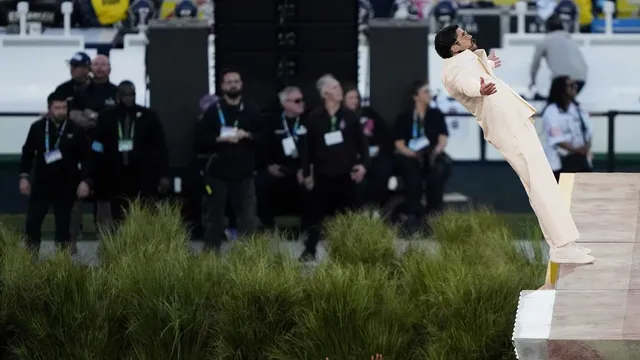
Bad Bunny employs plant-costumed performers at Super Bowl
Bad Bunny employs plant-costumed performers at Super Bowl
- Bad Bunny performed during the Super Bowl halftime show on February 8, 2026, celebrating Latino culture.
- The unique set included performers dressed as plants instead of traditional props due to stadium limitations.
- This creative choice led to widespread social media engagement, making the performers an unexpected highlight of the show.
Story
On February 8, 2026, at Levi's Stadium in Santa Clara, California, Bad Bunny performed during the Super Bowl halftime show. This event, often characterized as one of the most notable live performances, encountered a curious twist when the set featured numerous performers disguised as plants. The halftime show, mostly conducted in Spanish, was part of a broader celebration of Latino culture and came amid a social commentary surrounding contemporary issues in the United States. While artists like Lady Gaga and Ricky Martin took the stage, it was the sight of actual people portraying foliage that garnered widespread attention and laughter on social media. The decision to have performers dress as plants stemmed from logistical constraints related to the stadium environment. Instead of bringing in actual plants, which would have required extensive resources, Bad Bunny's creative team determined that dressing individuals in elaborate green costumes would provide the desired aesthetic for his set. The spectacle of 'plant people' attracted many viewers who initially questioned what they were seeing, but soon became part of the show's charm. The hiring process for the people who donned these unique costumes was straightforward. Each participant was compensated approximately $18.70 per hour and had to meet specific physical criteria, such as height and athletic build. Andrew Athias, one of the hired plant performers, remarked that despite the demanding costume, he found working at the Super Bowl experience exciting and would have participated even as a volunteer. Additional rehearsal hours were logged for alterations to ensure the costumes fit appropriately, creating an engaging atmosphere for both performers and spectators alike. Social media exploded with commentary about the 'bushes' on the field, leading many to discover that what they thought were static elements of the set were in fact living performers. The segment served to highlight not only Bad Bunny's innovative approach to performance art, but also the commitment to making festive and engaging appearances that resonate with diverse audiences. It pushed the envelope of what could be done during high-profile performances, creating a memorable celebration of artistry and culture at one of the world’s biggest sporting events.


