

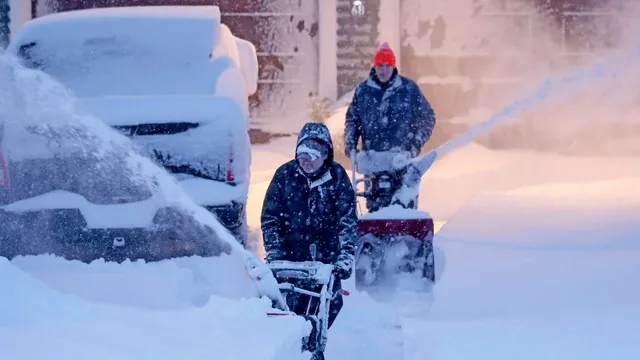
The Boston Globe stops printing for first time in 153 years amid historic blizzard
The Boston Globe stops printing for first time in 153 years amid historic blizzard
- A record-setting blizzard affected the northeastern United States, leading to heavy snowfall and unsafe conditions for travel.
- The Boston Globe management made the unprecedented decision to cancel its daily print edition due to these hazardous conditions.
- This event marks the first time in over 150 years that the Globe has ceased printing, indicating significant challenges faced by traditional news outlets.
Story
The Boston Globe, a prominent newspaper in the United States, halted its printing operations for the first time in its 153-year history on February 23, 2026, due to an unprecedented blizzard impacting much of the northeastern United States. The severe snowstorm led to record snowfall in Massachusetts' Bristol County, where the Globe's printing facility is located, receiving 32 inches of snow, while nearby Rhode Island recorded nearly 38 inches, surpassing previous records. The conditions made it unsafe for staff to travel to the printing plant and deliver the morning edition, forcing management to make the unprecedented decision. Historically, the Globe had to contend with various interruptions in its printing history, including labor strikes in the 1950s and 1960s, but none had led to the cancellation of a daily paper since its inception in 1872. During the infamous Blizzard of 1978, the Globe managed to print a limited number of copies, but delivery was heavily impeded by the weather conditions. The decision to cease printing was made only after careful consideration of the safety risks involved, as even access routes to the plant had become hazardous, with snow falling at rates of 2 to 3 inches an hour. The paper’s management recognized the change in readership habits, particularly with a substantial shift towards digital news consumption, a trend reflected in survey data indicating that only 7% of U.S. adults rely on printed newspapers for news. This reduction in dependency on print publications might have lessened the immediate impact of the absence of physical copies for subscribers, though the Globe's loyal readership remained a priority. As a result, arrangements were made to deliver the missed Tuesday edition to subscribers on Wednesday instead. Despite the challenges presented by the blizzard, the Globe's determination to maintain its publication schedule and adapt to the current news consumption landscape was evident. The commitment to delivering news, whether through the printed paper or digital means, exemplifies the resilience of established news organizations in a changing media environment, even as they face unprecedented circumstances.
Context
The impact of snowstorms on newspaper delivery has become a growing concern for publishers and distributors, particularly in regions that experience severe winter weather. Snowstorms can significantly disrupt logistics, delaying the production and distribution of newspapers. These disruptions arise from various elements, including hazardous road conditions, the absence of delivery personnel, and shortages in transportation resources. As a result, publishers must adapt their strategies to mitigate these effects, ensuring that readers continue to receive their newspapers even in adverse weather conditions. Moreover, the phenomenon of snowstorms affects not only delivery but also newspaper sales. During snowstorms, readership may decline due to the challenges faced by customers getting to stores or being able to purchase the newspaper. This can lead to decreased revenue for the publishers, whom, in turn, may need to assess their operational models to account for the impact of such weather events. Increasing the availability of digital news platforms has been one approach that many publishers have undertaken in response to these weather-related challenges. Additionally, the timing and severity of snowstorms can inform the publication schedules of newspapers. For example, some newspapers may choose to increase their coverage or include special editions during or following major storms to keep readers informed and engaged. This adaptation can also help to maintain subscriber loyalty during challenging weather conditions. Furthermore, collaboration between publishers and local weather services can provide better forecasting and planning to ensure that logistics are optimized ahead of anticipated snowstorms. In conclusion, the effects of snowstorms on newspaper delivery necessitate a comprehensive approach involving both logistical adaptations and changes to consumer engagement strategies. By acknowledging and preparing for these weather-related challenges, publishers can minimize disruptions and maintain service levels, ensuring that communities remain informed, regardless of the weather.


