

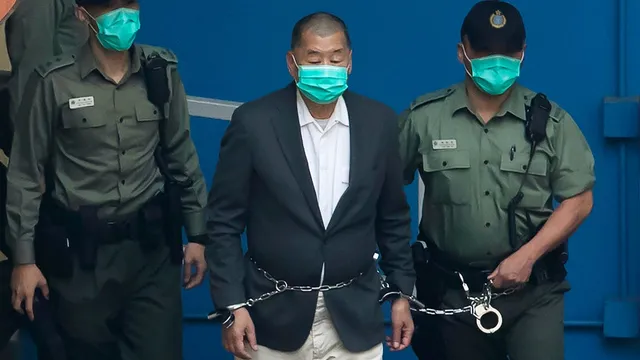
Jimmy Lai sentenced to 20 years for collusion with foreign forces
Jimmy Lai sentenced to 20 years for collusion with foreign forces
- Jimmy Lai was sentenced to 20 years in prison after being found guilty of conspiracy to collude with foreign forces.
- His case has prompted condemnation from various international governments and rights organizations.
- The sentencing reflects ongoing concerns regarding the suppression of free speech and human rights in Hong Kong.
Story
On December 2023, Hong Kong's notable democracy advocate, Jimmy Lai, was sentenced to 20 years in prison following convictions for conspiracy to collude with foreign powers and for conspiracy to publish seditious articles. Lai, who is 78 years old, had previously been the owner of the now-defunct tabloid Apple Daily and has been a prominent figure advocating for democracy in Hong Kong. His case has sparked considerable international outcry, raising alarms about the diminishing freedoms in the region, especially after the introduction of the national security law. Lai’s sentencing came after a prolonged legal battle, during which he was held in custody since 2020. His co-defendants, who pleaded guilty to charges related to collusion, received prison sentences ranging from over three years to ten years. This situation is viewed by many as a stark illustration of the punitive measures taken by authorities against dissent and free speech in Hong Kong, a city that had been known for its vibrant media landscape. International reactions have ranged from condemnation to calls for his immediate release. The foreign ministers of Australia and the United Kingdom have expressed grave concerns regarding the implications of Lai's sentence on free speech and human rights in Hong Kong. Both have urged a rethink of the national security law, which has largely been criticized for its vague parameters that allow for broad interpretation and enforcement against perceived threats to national security. Statements by rights groups and organizations such as Amnesty International underscore the belief that Lai’s sentencing reflects a much larger issue of civil liberties suppression in the region. In stark contrast, Chinese authorities, including the Foreign Ministry, defended the ruling as a necessity for national security and a demonstration of the rule of law in Hong Kong. They urged foreign nations to respect China's sovereignty regarding its domestic legal matters. The discussion surrounding Lai’s case has opened up wider debates on how freedom of expression is being curtailed, and the broader implications this has not only for Hong Kong but for international norms regarding media and speech. The international community maintains its view that such legal pursuits are politically motivated and detrimental to the preservation of democratic values. As developments in Hong Kong continue to unfold, observers are left to ponder the future of civil rights in the territory and whether actions like Lai’s sentence will deter or galvanize further movements for democracy, both regionally and internationally.


